
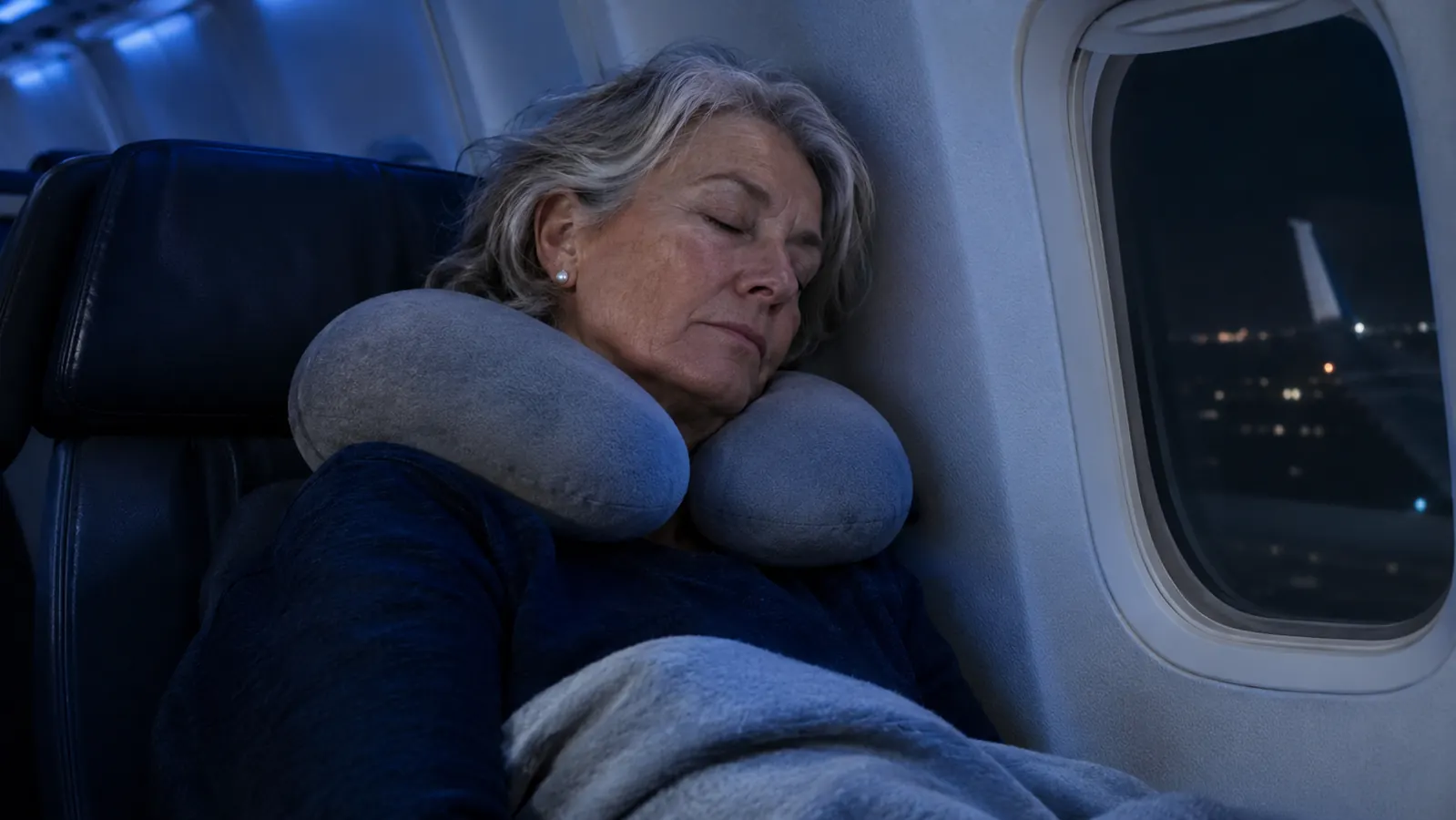
Twenty-six years as a travel agent and I still board a plane the same way: tired, hopeful, and already a little stiff in the neck. The first hour is fine. It is hour four that gets me. My head drifts toward my shoulder, my chin drops, my mouth comes open in a way I would rather not think about, and I wake up somewhere over the Atlantic with a crick that follows me through customs and into the first two days of the trip. I have tried the other approaches. A rolled cardigan jammed against the window goes flat in twenty minutes. A hood pulled up over my ears makes me too warm and does nothing for my neck. Leaning forward onto the tray table leaves a mark on my forehead. If you have flown long-haul in the last decade, you have probably done at least two of those.
Eighteen months ago, a few weeks before a long flight to Ireland, I bought the napfun memory foam neck pillow. I paid for it myself on Amazon, the same way I buy nearly everything I recommend to clients, and it has flown with me on every trip since. Walt has never touched it. He is one of those men who can fall asleep sitting straight up in his seat with his arms crossed, and I have decided not to resent him for it. What follows is the routine I have worked out since that Ireland trip, step by step. It is the same routine I now walk my clients through before their first long-haul flight, usually over the phone, usually twice.
The thing I stopped mocking somewhere over the Atlantic
Memory foam that softens with your own body heat, a travel bag that compresses it down, and 10.88 ounces in my carry-on. It has been in my bag on every flight since Ireland.
Amazon Check Today's Price on Amazon →Step 1: Choose the Seat Before You Pack the Pillow
No pillow can outwork a bad seat. On our trips Walt takes the aisle and I take the window, and that is not a sacrifice on my part. The window gives me a wall to lean into, a side of the cabin nobody walks past, and one fewer person to climb over every time I want to sleep. If you are booking for two, put the sleeper at the window and the restless one on the aisle. That single decision does more for a nap than anything you can buy, and it costs nothing but a little planning in March.
Aisle seats are not hopeless. I have slept in plenty of them, usually on the short domestic hops where the flight is barely longer than the boarding process. You just have to expect interruptions and set your expectations to match. Book as far forward as your fare allows. The rows near the back are where the galley noise lives and where the lavatory line forms, and neither one is a friend to a tired woman of sixty-three.
One more thing I tell every client: look at the seat map twice, and then look again the week before you fly. Aircraft get swapped and seats get reassigned. The window you carefully chose in March is not always the window you board in June.
Step 2: Break It In at Home, Not Over the Atlantic
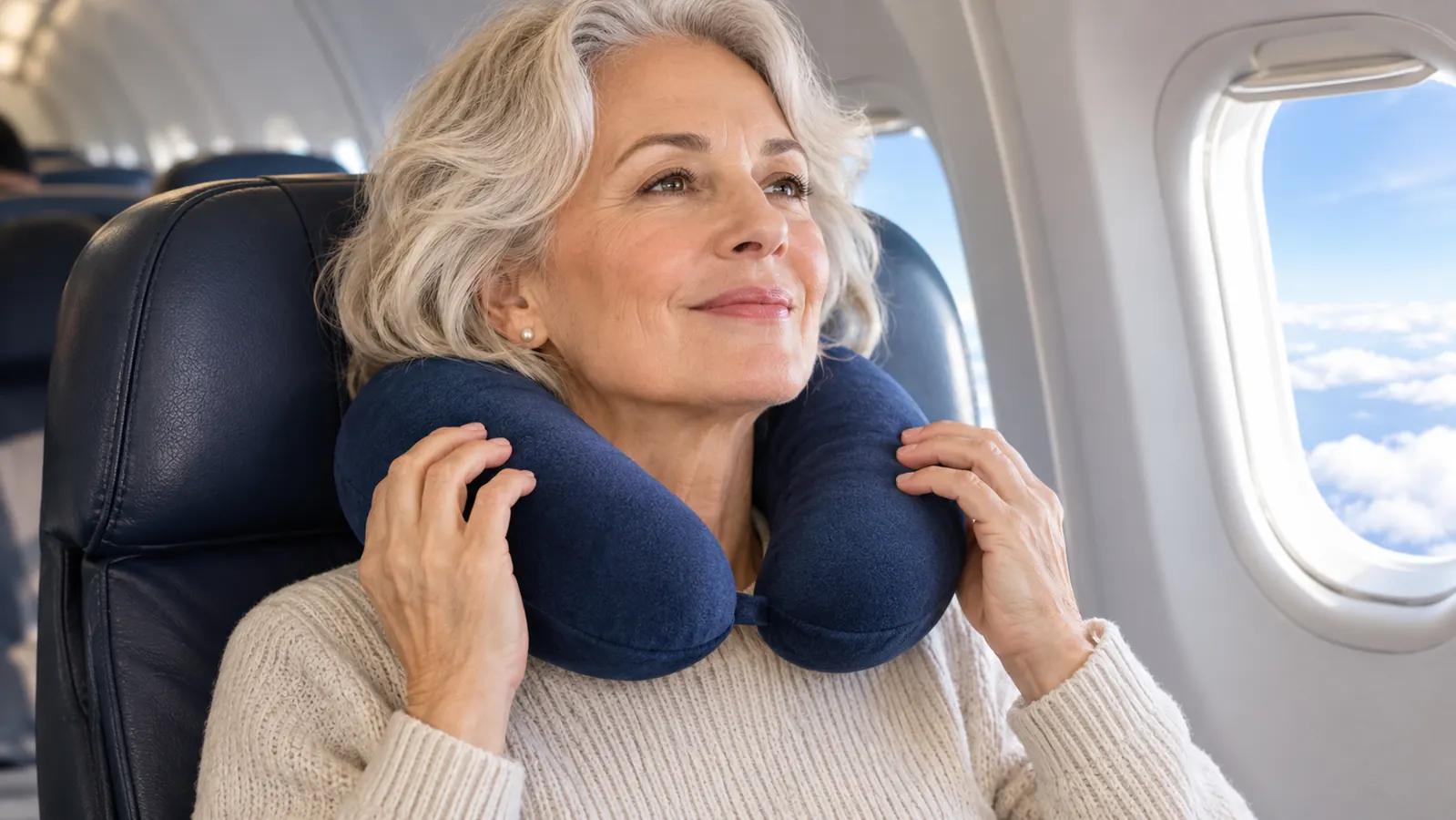
The first time you wear a neck pillow should not be at 35,000 feet with the cabin lights down and a stranger's elbow in your ribs. I spent an hour in my reading chair with mine before Ireland, and I learned two things. The foam is on the soft side, softer than I expected. And it takes a few minutes of your own body heat before it settles in and takes the shape of your jaw. Ten minutes in, it stops feeling like a piece of luggage and starts feeling like a pillow. If you put it on for the first time in the air, you will spend that first hour fidgeting instead of sleeping.
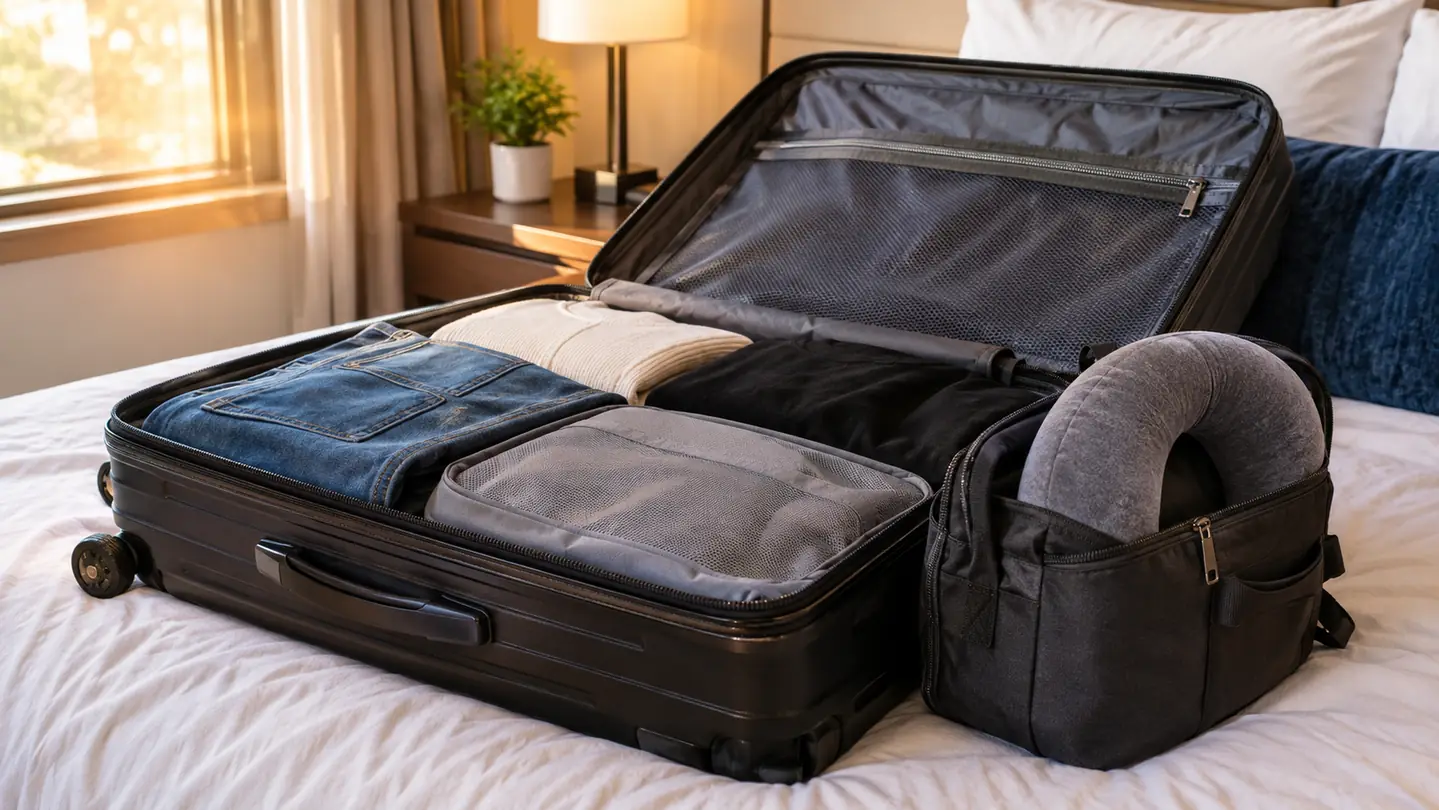
The napfun pillow comes with a portable travel bag, and the whole thing compresses down inside it. That matters more than it sounds. A neck pillow that will not squash flat steals the corner of a carry-on you were saving for a pair of shoes. Mine lives in the outer pocket of my Samsonite and takes up less room than my toiletries bag, which is the only test that counts when you are packing light for two weeks.
The care instructions say machine wash, and I take them at their word once we are home and the suitcase is unpacked. Eighteen months and a good many flights in, the foam still comes back to its shape. That is the whole difference between memory foam and the alternative, which for me was a cardigan that felt soft for ten minutes and then sat against that window like a lump for six hours.
Step 3: Set Up the Seat Before the Lights Go Down
Boarding is when you do the small chores, so that you are not doing them in the dark. As soon as I sit down I take the pillow out of its bag and put the bag in the seat pocket. I wipe the tray table with a packet from my purse, set my watch, and get my earbuds where I can reach them without unbuckling anything. Walt teases me about the routine. Walt is also the one asking for a wipe twenty minutes later, so I have stopped defending it.
Keep the things you cannot replace on your body, not in the seat pocket. Passport, cards and cash go in the neck wallet under my top before we leave the house, and they stay there until we are through the other end of the airport. A neck pillow is a comfort item. It is not a place to tuck a passport while you sleep, and I have watched people do exactly that and then pat down three rows of seats at baggage claim.
Water is the other thing I set up early. I buy a bottle after security and put it in the seat pocket where I can reach it without waking anyone. Cabin air is dry, and a dry throat is the fastest way to end a good nap twenty minutes after it starts.
Step 4: Wear It So Your Chin Cannot Drop
Here is the part people get wrong. The pillow does not go around your neck like a scarf with the opening at the back. The gap belongs at the front of your throat, with the foam rising under your jaw and behind your ears. That is what keeps your head from rolling forward and what keeps your mouth closed. The shape is semicircular for a reason, and once you turn it the right way you will wonder why you spent ten years wearing it the other way and waking up with a sore spot under your ear.
Then lean back. The foam uses your own body heat to soften and contour, so it needs a few minutes to do its job. If you have the window, put the back of the pillow against the cabin wall and let the plane hold you up. If you are in a middle seat or on the aisle, sit back into the seat rather than forward, because the whole system fails the moment you slump toward your tray table.
One honest note for couples. Do not plan to sleep on your husband's shoulder unless the two of you have discussed it in advance. I did not discuss it in advance. I have apologized, more than once, and I now bring my own pillow and stay on my side of the armrest for the whole flight.
Step 5: Protect the Nap and the Things That Matter
A nap on a plane is only useful if it ends at the right time. I set an alarm on my watch for forty-five minutes before landing, and I tell the crew where I am sitting and that I would like to be woken for the meal. Flight attendants have been doing this for a living a long time and they are better at it than I am. I also write the connection time in a small notebook before I close my eyes, because my arithmetic at hour seven is not trustworthy and I know it.
Before I settle, I say a quiet thank you for safe travel and ask for a little more of the same, and then I put the eye mask on. It is not a complicated ritual. It just helps me let go of the aisle and the beverage cart and the man behind me who has discovered the recliner button.
If you are past sixty, as I am, get up once every couple of hours whether you want to or not. The nap is worth less than the circulation. And when we land, the pillow goes back into its bag before I stand up. Something that lives in the same pocket of the carry-on on every single trip is a thing you do not lose. Eighteen months in, mine has never been left on a seat, and I would like to keep that record intact.
What Else Helps
The pillow does the heavy lifting for your neck, but it is not the whole flight. Compression socks make a real difference on anything over four hours, and I put them on before boarding rather than in the air, because by then my ankles have already made their decision. An eye mask and a pair of foam earplugs cost almost nothing and block the two things that wake me most, which are light and the sound of a beverage cart coming down the aisle at the exact moment I finally drop off.
I skip alcohol now. A glass of wine feels like it helps you fall asleep and then it hands you back a worse nap two hours later, usually with a dry mouth and a headache. I drink water instead, eat something plain before boarding, and keep the coffee for the airport on the way home, when I actually want to be awake.
The napfun pillow averages 4.2 stars across more than 21,000 ratings, which is about what I would expect from a piece of foam that suits some necks better than others. It is not a fix for a seat that will not recline, and it will not turn economy into a bedroom. What it does is hold your head where your head belongs while you are asleep, and on a seven-hour flight that is most of the work. My full review covers the fit details and the long-term wear, and if you are deciding between this and the inflatable kind, the comparison is worth ten minutes of your evening.
Eighteen months of flights later, the foam still comes back to its shape when I pull it out of the bag. The cardigan never did that.
Put it in the same pocket every trip and stop thinking about it
It compresses into its own travel bag, washes when you get home, and weighs 10.88 ounces. Mine has flown every trip since Ireland, and it will fly the next one.
Amazon Check Today's Price on Amazon →