
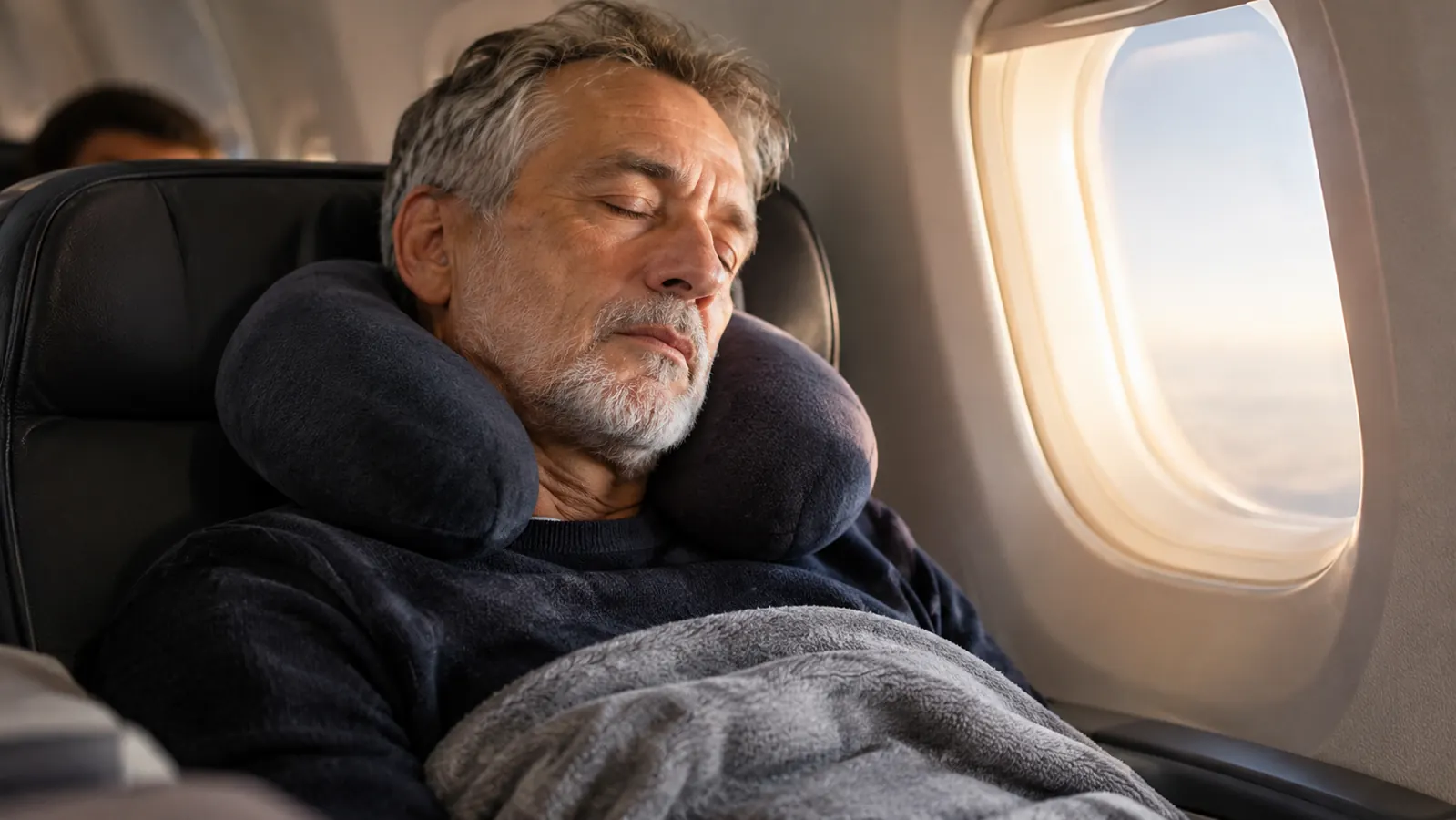
Fourteen hours in the air is a long time to hold your own head up. I did it badly for most of my working life. For years my travel kit included a rolled cardigan that I wedged between my ear and the window, and by hour six it had slid into my lap and I was doing the slow chin bob that everyone in row 34 pretends not to see. Eighteen months ago, before a long flight to Ireland, I bought the napfun memory foam neck pillow. It has been on every flight since. Walt still travels without one, which tells you something about my husband and something about the pillow.
Here is the short answer, if you are standing in an airport with your phone out. The napfun is the pillow I own, the one I would buy again, and the one I would put into my own sister's hands before a transatlantic flight. An inflatable neck pillow is a different tool for a different trip. I have never owned one. I am working from the listings, from the ones my clients pull out of their bags at the gate, and from watching strangers inflate and deflate them across more concourses than I can count. Foam holds a shape. Air moves.
| napfun Memory Foam | Inflatable Pillow | |
|---|---|---|
| Support through a full flight | Memory foam holds its shape; the semicircular cut gives the neck something to lean into for the whole flight | Support softens as the air shifts and the seams give a little |
| Firmness | One soft feel that warms to your jaw over the first few minutes | You set it with your breath, from very firm to nearly flat |
| Packed size | Compresses into the travel bag that comes with it, but foam is still foam | Deflates to almost nothing and slides into a jacket pocket |
| Weight | 10.88 ounces on the listing | Lighter than foam, by a wide margin |
| Nothing to fail | No valve, no seam, no seal to give out in the middle of the night | One slow leak and it is a flat rag until you land |
| Cleaning | Care instructions say machine wash | Wipe the plastic and hope the valve dries out |
| Best for | Overnight flights and anyone who actually sleeps sitting up | Short hops and one small under-seat bag |
How These Two Ended Up Side by Side
I have sold travel for twenty-six years, mostly from a small office outside Madison, Wisconsin, and in that time the neck pillow question has come up more often than any packing question except shoes. A client would lean across the desk and ask whether the U-shaped thing was worth the room in the bag. For years my honest answer was that I did not know, because I had never found one I liked well enough to recommend.
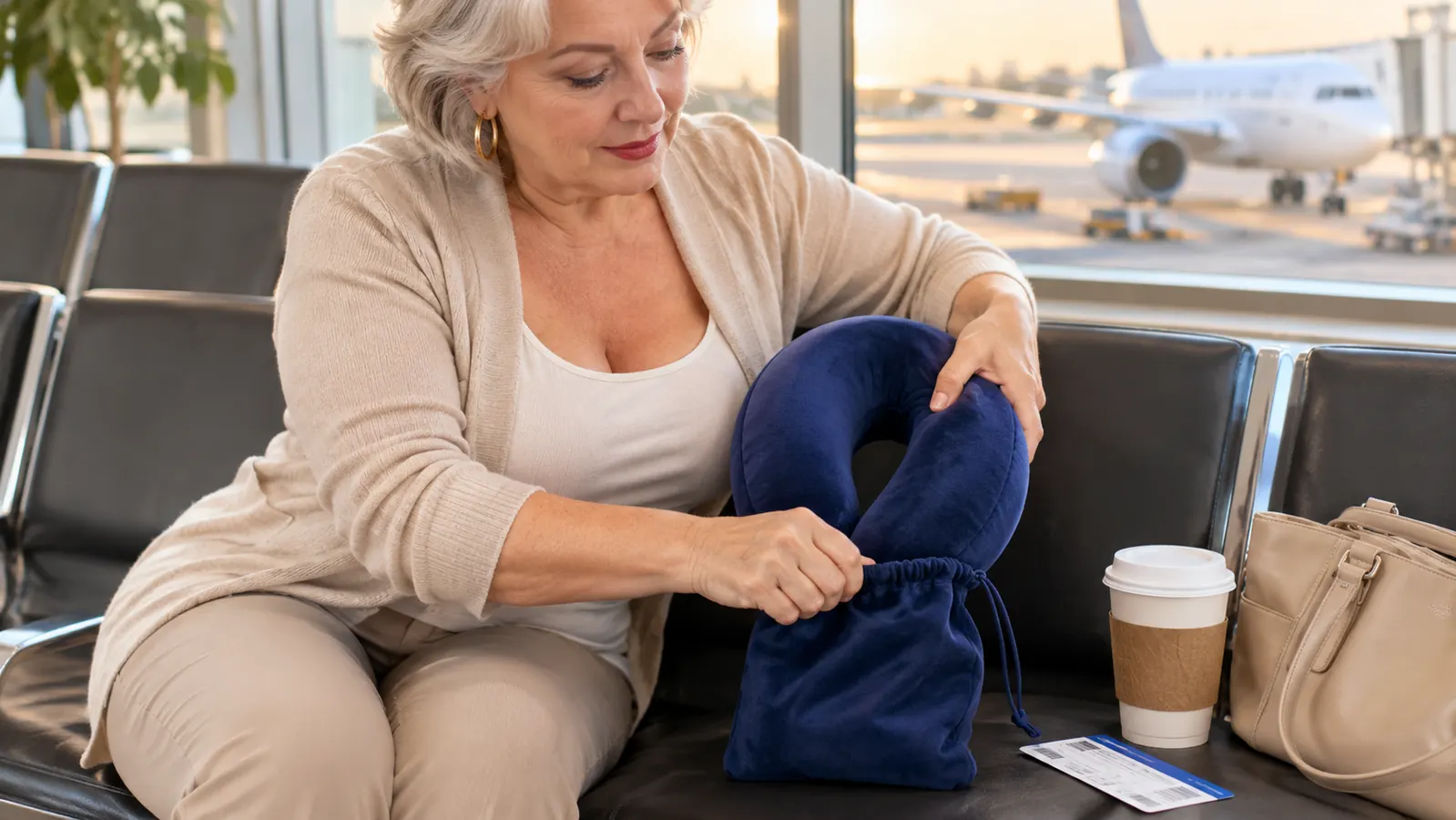
The napfun is a memory foam pillow in a semicircular shape, listed at 11.02 inches by 11.02 inches and 10.88 ounces. It comes with a travel bag, and the bag is not decoration. You fold and press the foam down into it and it takes noticeably less room than the pillow does in your hand. The care instructions say machine wash. The listing says the foam uses your own body heat to contour, and I would call that accurate but slow. It is a soft foam. Give it five or ten minutes and it warms to the shape of your jaw and shoulder, and then it stays where you put it.
An inflatable pillow works the opposite way. You open a valve, blow it up, close the valve, and trust the seal. A good one lets you choose how firm it is by how much air you leave in. A tired one leaks at the seam by the second hour, and I have watched a man at O'Hare spend twenty minutes chasing a slow leak with his thumb while his wife studied the ceiling as though she had never met him.
It has been to Ireland, Portugal and Italy with me. The foam has not cracked, gone flat or lost its shape, and the travel bag has not split.
How I've Used It
My testing is not lab testing. It is an eighteen-month stretch of real flights, starting with a long one to Ireland and continuing through Portugal, Italy and several two-hour domestic hops. Walt does not use a pillow at all, so I have no second opinion in the house, only my own neck and a habit of paying attention.
On the Ireland flight I slept about four hours in one stretch, sitting up, in a window seat. For me that is close to unheard of. What made the difference was having something solid behind and beside my neck that did not collapse the moment I leaned on it. With the cardigan I was adjusting every twenty minutes and never fully let go. With the foam I stopped thinking about my neck at all, which is the entire point of a piece of gear.
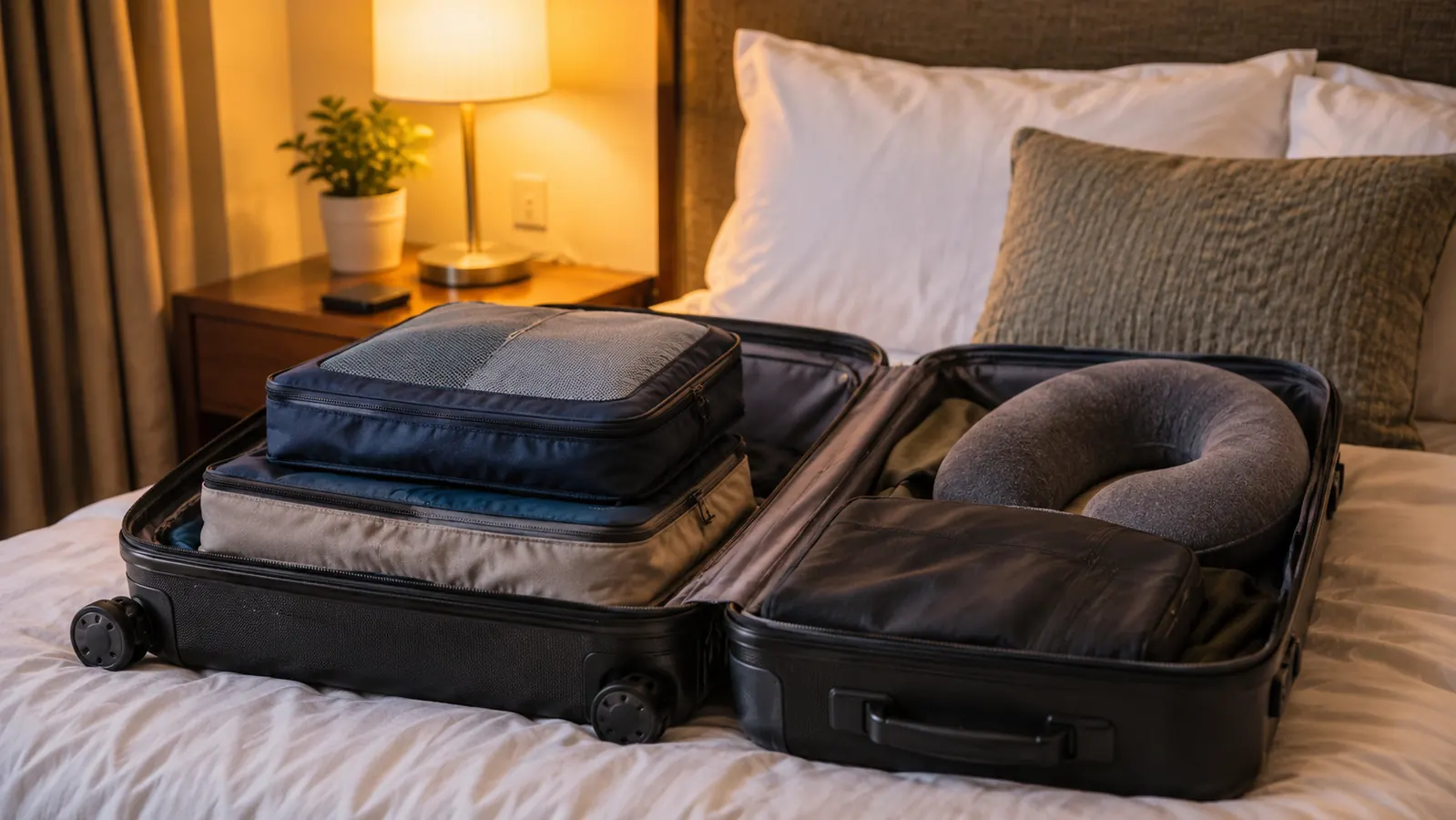
On short flights it stays in its bag at the top of my Samsonite and I do not take it out. That is not a knock on the pillow. It is an honest accounting of when it earns its space: the long flights, the overnight ones, and the connections where you have four hours in a concourse and nowhere to put your head.
Where the napfun Wins
Support over a long flight, first. The job of a pillow in a plane seat is to stop your head from rolling forward and give your neck somewhere to lean. Memory foam does that because it holds its shape. It does not give out under the weight of your own head at hour four, which is precisely the hour you need it most. The semicircular cut sits around the back and sides of the neck, so you can tip your head toward the window without your chin dropping to your chest.
Reliability, second, and at 63 this is the part I care about. There is no valve, no seam to split, no seal to fail. Nothing has to be blown up, and nobody within three rows has to listen to you blow it up. When a thing has no moving parts, there is less to go wrong in a hotel room in a country where you do not speak the language well enough to replace it.
Cleaning is the third, and it is small until you need it. The care instructions say machine wash. A plastic pillow with a valve in it does not offer you that. I washed mine after a long trip, let it dry, and it came back the same pillow, which is more than I can say for most things I have put in a machine.
The pillow that has crossed the Atlantic three times without losing an ounce of shape
Memory foam in a semicircular shape, 10.88 ounces on the listing, with a travel bag that actually compresses it. Eighteen months in the window seat and mine has not gone flat.
Amazon Check today's price on Amazon →Where an Inflatable Pillow Wins
Packed size, and it is not close. Deflated, an inflatable folds down to something you can push into a jacket pocket or the end of a personal item. The napfun compresses into its bag, and the bag earns its place, but foam is still foam. If you fly with one small bag under the seat and nothing else, the inflatable is the only one of the two that asks nothing of you.
Firmness control, second. Some travelers cannot abide foam pressing up under the jaw, and I understand it. With an inflatable you decide. Firm enough to hold you upright, or soft enough that your chin nearly reaches your chest. That is a real advantage for a passenger who knows exactly what she wants and intends to stay awake for most of the flight.
And for a short hop it is enough. On a two-hour flight I am reading, not sleeping, and a pillow barely matters. If you are the traveler who wants a little something behind the neck and does not want to carry it, an inflatable does the job and disappears into the bag afterward. There is also less to lose. It is the kind of thing you can leave in a seat pocket without a backward glance.
What the Listing Says, and What It Means in Practice
I read labels. It is a habit from twenty-six years of telling other people what to pack, and it has saved me from more than one bad purchase. So here is what the napfun listing actually claims, and what I found.
It lists the fill as memory foam and the firmness as soft. That matches. This is not a firm pillow that fights you. It is a soft one that settles. It lists the shape as semicircular, 11.02 inches by 11.02 inches, and 10.88 ounces on the scale. All of that is the kind of plain, checkable detail I like to see, because it means the seller is describing a pillow rather than a feeling.
It lists the special features as cooling, portable, adjustable and compressible. Portable and compressible I can vouch for, because of the bag and because the foam does go down. Cooling I cannot vouch for. On a summer flight the back of my neck was damp by hour five and I have no advice beyond a scarf. Adjustable I would take with a grain of salt. The foam is soft and it contours, but you are not dialing anything in with your hands.
It also lists machine wash under care instructions, and a support promise within 24 hours. I have never needed the second one. The first one I have used.
What Neither Pillow Fixes
Neither one saves you from a middle seat, a reclined seat in front of you, or the fact that you are past sixty and your neck has opinions. A pillow helps the posture. It does not fix the airplane.
The foam does get warm. That is the tradeoff for something that holds you instead of letting you sink. If you run hot, plan for it.
And the travel bag takes a squeeze. If you are hustling through a connection, the foam will not fold itself, and you will end up carrying it by the strap with the pillow half in and half out. Give yourself thirty seconds at the gate. This is not a piece of gear that rewards hurrying.
What I Liked
- Holds its shape through an overnight flight
- No valve or seam to fail in the middle of a trip
- Compresses into the travel bag that comes with it
- Care instructions say machine wash
- 10.88 ounces, so it does not weigh your bag down
Where It Falls Short
- Bulkier than air when packed, even in the bag
- One soft firmness, with no way to make it firmer
- Needs a few minutes of body heat before it contours
- Warm against the neck on a summer flight
- Repacking it takes a moment you may not have at the gate
Who Should Buy Which
Buy the napfun if you take overnight or long-haul flights, if you actually sleep sitting up, and if you want one purchase that will last several years. It suits a carry-on traveler who can spare a little room, which on a 20-inch spinner is a real question and not a small one. It also suits anyone who has been burned by gear with parts. Mine lives in the top of my Samsonite, next to the neck wallet, and I have not had to think about it since Ireland.
Buy an inflatable if your flights are short, if you are packing into one small personal item, or if you want to control exactly how firm the thing is under your chin. It is also the better choice for the traveler who wants to be able to leave it behind without a second thought.
And skip both if your trips are ninety minutes on a regional jet and you never once nod off. A rolled scarf and a window seat will do you fine, and you will have saved yourself the business of carrying anything at all.
One pillow, bought once, still doing its job three countries later
Soft memory foam, a semicircular shape that gives the neck somewhere to lean, 10.88 ounces, and a travel bag that compresses it down. If your next flight is a long one, this is the version I would pack.
Amazon Check today's price on Amazon →