
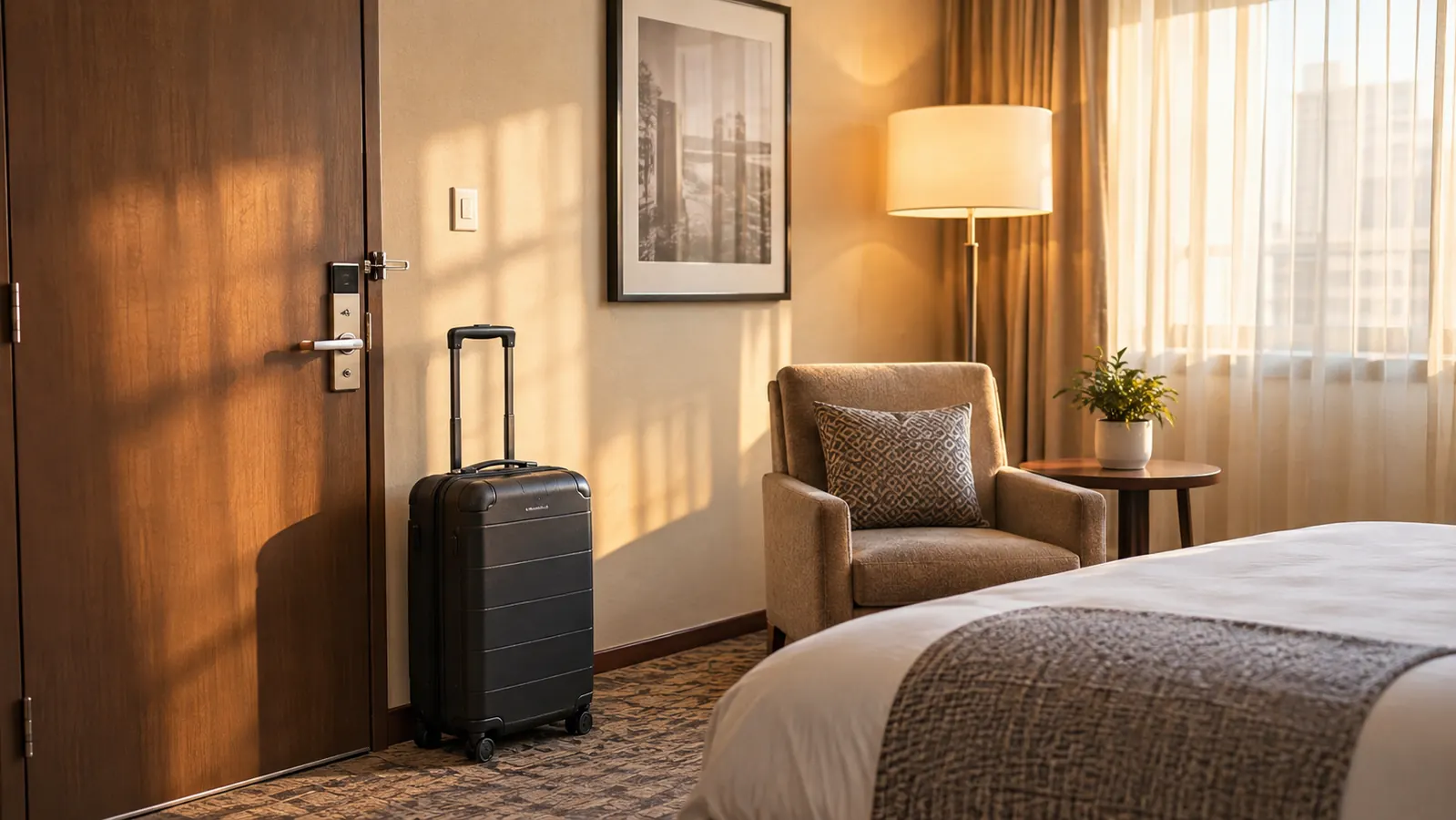
I have checked into a lot of hotel rooms. Twenty-six years as a travel agent, and a few trips a year of my own now that I am part time, and I still do the same thing before I unpack: I put a hand flat on the door and push. Most of the time the hardware is sound. Twice it has not been. One room had a deadbolt that turned but never seated. Another had a chain painted over so many times it would not reach the catch. Nothing happened either night, and I still did not sleep. What changed my routine was a small stainless steel piece that now lives in the zip pocket of my carry-on. The brand is Addalock, and I have carried one on every hotel night for about two and a half years.
The usual advice is to wedge a chair under the knob or stack your bags against the door. I have done both, and neither one helped. A chair slides on hotel carpet. Bags tip over. And the plain truth is that a barricade you have to climb over at two in the morning to reach the bathroom is its own kind of problem. What I wanted was simpler than that. I wanted the door to be a door. That is what this little piece of steel does, and once you know the order of operations it takes about fifteen seconds.
I bought mine after a client told me about a room where the door never latched properly, no matter how she pulled it. She was fine. She also did not sleep, and she spent the rest of the trip thinking about it. That is the part that stays with me. I ordered the Addalock the week I got home, and it has gone with us ever since.
The fifteen-second door check I do before my shoes come off
Addalock is one piece of stainless steel, 4.2 ounces, and it fits most inward-opening hotel doors. It has ridden in my carry-on for two and a half years.
Amazon Check Today's Price on Amazon →Before You Start: What the Addalock Is and Is Not
The Addalock Original is a single piece of stainless steel, 5.8 by 3.5 by 0.7 inches, and 4.2 ounces. It is not electronic. No battery, no alarm, no app, nothing to charge the night before a flight. It works on the principle of the door frame itself. The lock sits in the latch plate where the door latches, the door closes against it, and the door cannot be pushed open from the hall while it is in place.
What it is not is a replacement for the deadbolt, and it is not for every door. It needs a door that opens inward into the room, with a latch plate on the frame. Older European hotels sometimes have doors that open out into the corridor. Sliding balcony doors are out. I check the swing before I recommend one to a client, and I check it before I put mine in, because a lock that does nothing is worse than no lock at all if it makes you stop paying attention.
Step 1: Look at the door before you unpack
Set the bag down inside, close the door, and study it the way a carpenter would. Where does the latch go when the door shuts? There is a rectangular hole in the metal plate on the frame, at about hip height, and that hole is where the Addalock sits. If you cannot find it, turn on the overhead light and run a finger along the frame. Every inward-opening hotel door I have stayed behind in the last few years has had one.
Then push the door from the inside with your hand flat, the way you would test a screen door. This is where a deadbolt that turns without seating will announce itself, and where a door swollen from humid weather will show that it no longer sits flush. Nothing dramatic. You are just finding out what you have before you decide how much you need the lock.
If the door opens outward, if there is no latch plate, or if you are looking at a slider, stop. The Addalock is not the right tool for that room, and pretending otherwise only wastes the fifteen seconds you were going to spend feeling safer. Use the deadbolt, use the chain, put a chair under the knob if it helps you sleep, and mention it at the front desk in the morning.
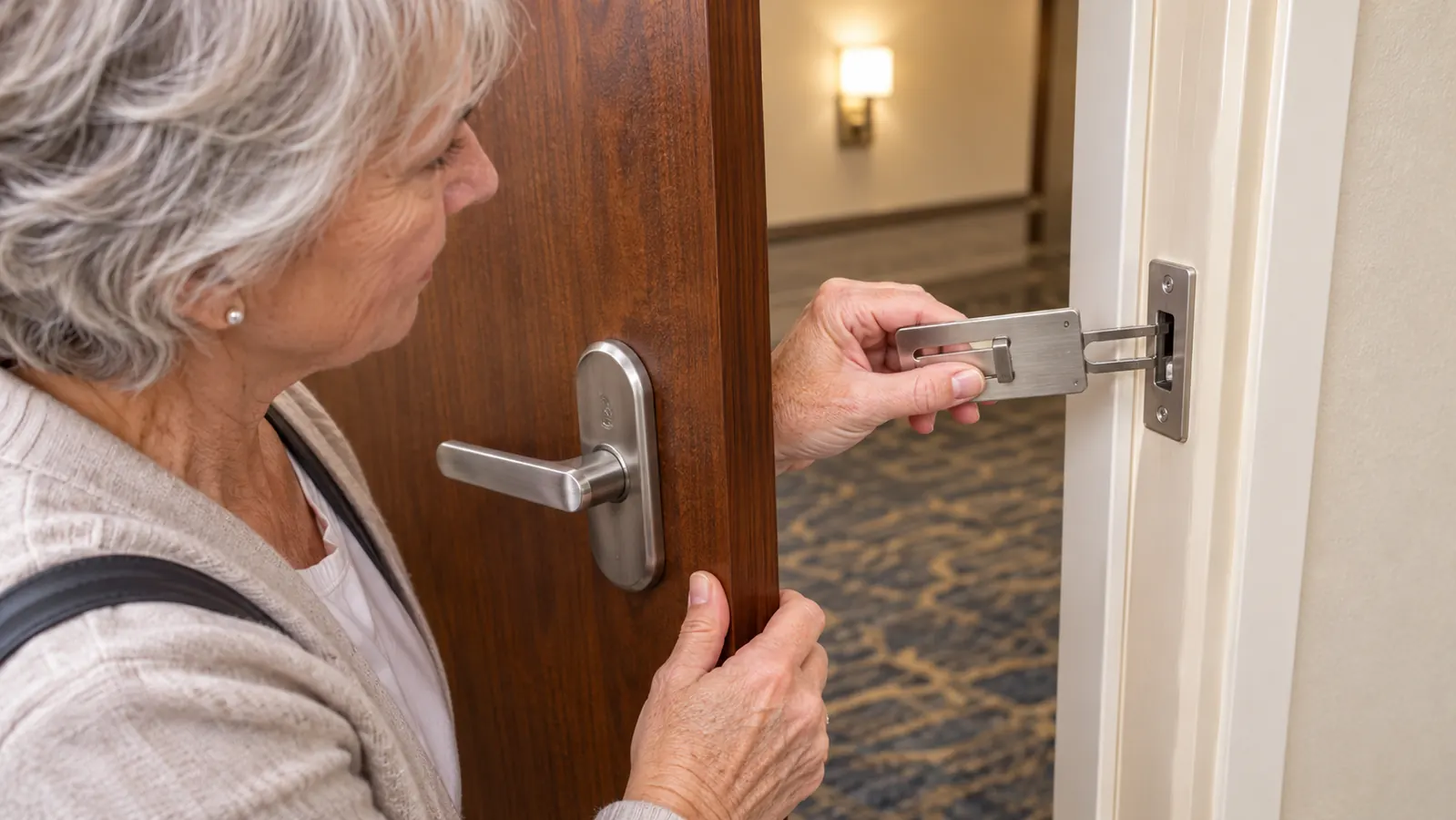
Step 2: Set the lock into the latch plate
Open the door and stand in the doorway with the hallway at your back. The lock goes into the rectangular hole in the strike plate on the frame. The part that stays inside the room is the part the door will close against. That is the whole installation. No tools, no screws, and no instructions needed after the first time, which matters when you have been on a plane for nine hours and cannot remember your own address.
Two small things I have learned. First, hold the door open far enough to see what you are doing, and put a foot against the bottom edge, because hotel doors are heavy and they swing on you. Second, if the strike plate is buried under coats of paint, which happens in older buildings, work the lock in gently rather than forcing it. Mine has always gone in. Once or twice it took patience.
The whole thing weighs 4.2 ounces, about the same as a deck of cards, so it costs you nothing in a carry-on that you were going to notice at the airport. That is the reason it comes with me, and the reason it goes straight back in the bag when we get home.
Step 3: Close the door and test it like you mean it
Shut the door from the inside and pull the handle. Then push. Then lean on it once, gently, with the chain off. What you are checking is not whether the door is locked but whether the lock is seated. If the door gives even a quarter inch, open it, take the Addalock out, and set it again. A lock that is not aligned will hold right up until it does not.
Then open the door and close it a second time. The first closing sometimes nudges the piece slightly out of place, and the second one tells you the truth. I know how fussy that sounds. I have also done it in a hotel in Dublin and a motel outside Rockford, Illinois, and both times the second closing was the one that settled it.
Once the Addalock is in and the door is shut, the deadbolt goes on and the chain goes on. All three. It is a layer, not a substitute, and I would say the same about any lock you can buy for a hotel room. The lock is not really the point. The point is that you stop listening to the hallway.
It weighs 4.2 ounces, it lives in the same zip pocket of my carry-on, and it has come out on every hotel night for two and a half years without once failing to seat.
Step 4: Build the rest of the room around it
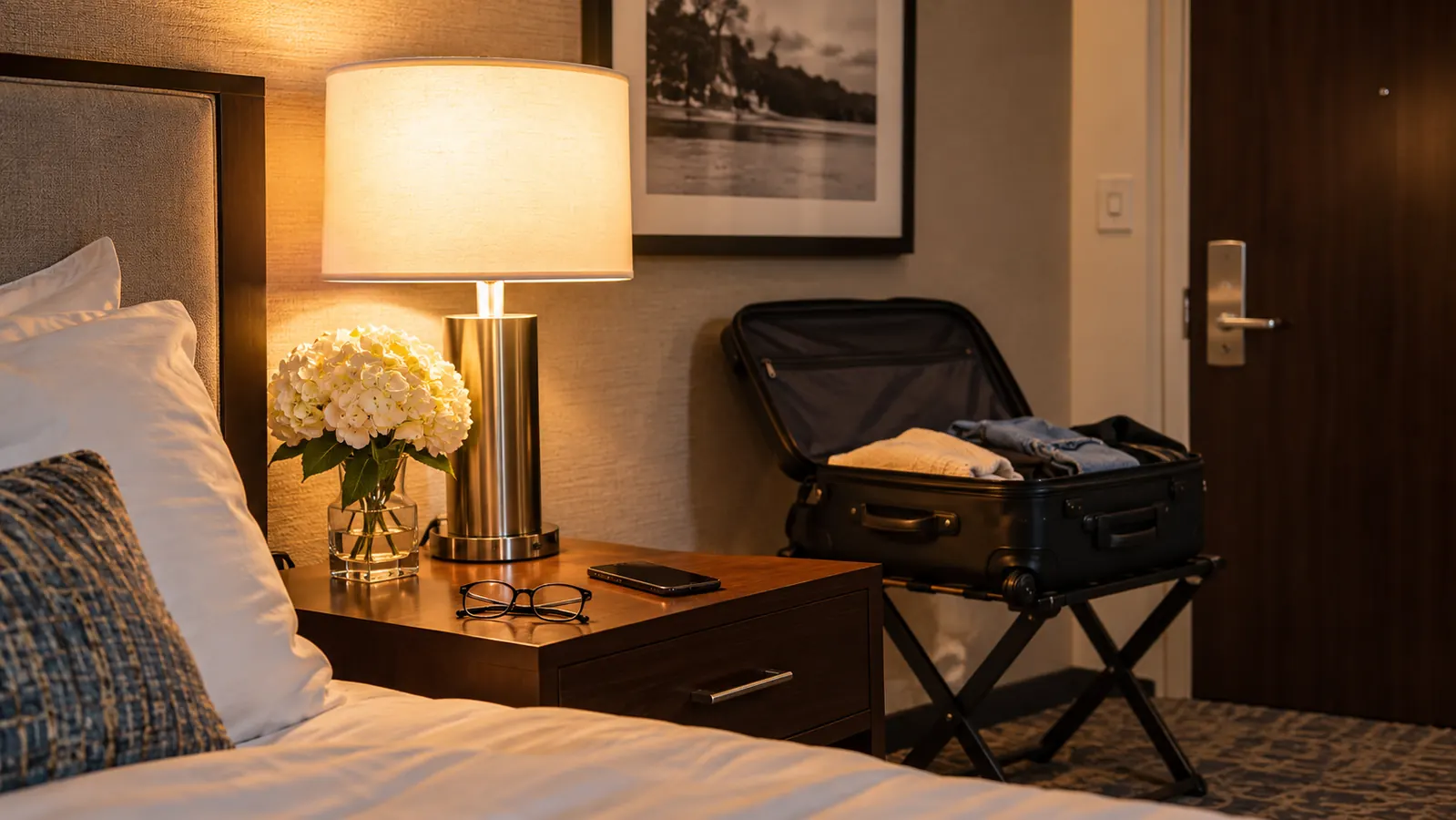
The rest of the room deserves five minutes as well. I check the connecting door if there is one, because an adjoining room has two doors and only one of them is the one you are looking at. I check the windows and the balcony slider. I look through the peephole once from the inside to see how much of the hallway it actually shows. If the deadbolt is stiff, I work it a couple of times while I am still dressed and can call the front desk about it.
The other habit is deciding out loud where the lock goes when we leave. It comes out of the strike plate and back into the zip pocket before we go down to dinner. Not in the morning, when we are rushing for a flight and Walt is already out in the hallway with his coat on. He teases me about announcing it. He has also never once had to hunt for the thing.
If you travel alone, or if you are the sort of person who wakes at three in the morning and cannot immediately remember what city you are in, this routine is worth more than any gadget you can buy. It gives your hands something to do so your mind can settle. A quiet prayer, a checked door, and I am usually asleep before the hall light clicks off.
Step 5: Take it out before you go, and never force it
In the morning, open the door first and then lift the Addalock out. If you try to pull it while the door is shut, it will not budge, and you will spend four minutes convinced it is stuck. It is not stuck. Open the door, lift the piece out of the strike plate, and put it away.
One habit I would pass on to anyone, whatever lock they carry: leave nothing wedged in a hotel door frame when you check out. Housekeeping has enough to do, and the next guest does not need to sort out your hardware. The Addalock comes out in two seconds and the room goes back to the way you found it.
What Else Helps
A good lock solves one problem well. The rest of the room still needs attention, and none of what follows costs a thing.
Use the deadbolt and the chain even when the Addalock is in place. Keep your key card with you when you go down the hall for ice instead of leaving it on the nightstand, because hotel doors close behind you. Do not say your room number out loud at the front desk, and if the clerk announces it, ask for a different room quietly. Know where the stairs sit relative to your door. These are small things. They add up to a night where you are not rehearsing what you would do.
I have never used one of the wedge alarms that shrieks when a door moves. Clients swear by them, and if a loud noise is what lets you sleep, that is a reasonable choice to make. My objection is practical. It lives on the floor, it takes up room in a bag, and all it can do is tell you something is happening. The Addalock keeps the door from opening, which is the part I care about at my age. That is my preference, not a rule, and I would rather you carry the thing that lets you rest than the thing that wins an argument.
One more, and I mean it: if the door hardware in your room is genuinely broken, a portable lock is not a repair. Ask to move. I have moved rooms twice in twenty-six years and both times the front desk was gracious about it. A travel lock is for peace of mind, not for covering for a hotel that will not fix a door.
The smallest thing in my carry-on does the most work
One piece of stainless steel, 4.2 ounces, fits most inward-opening hotel doors. No batteries, no setup, no learning curve after the first night.
Amazon Check Today's Price on Amazon →