
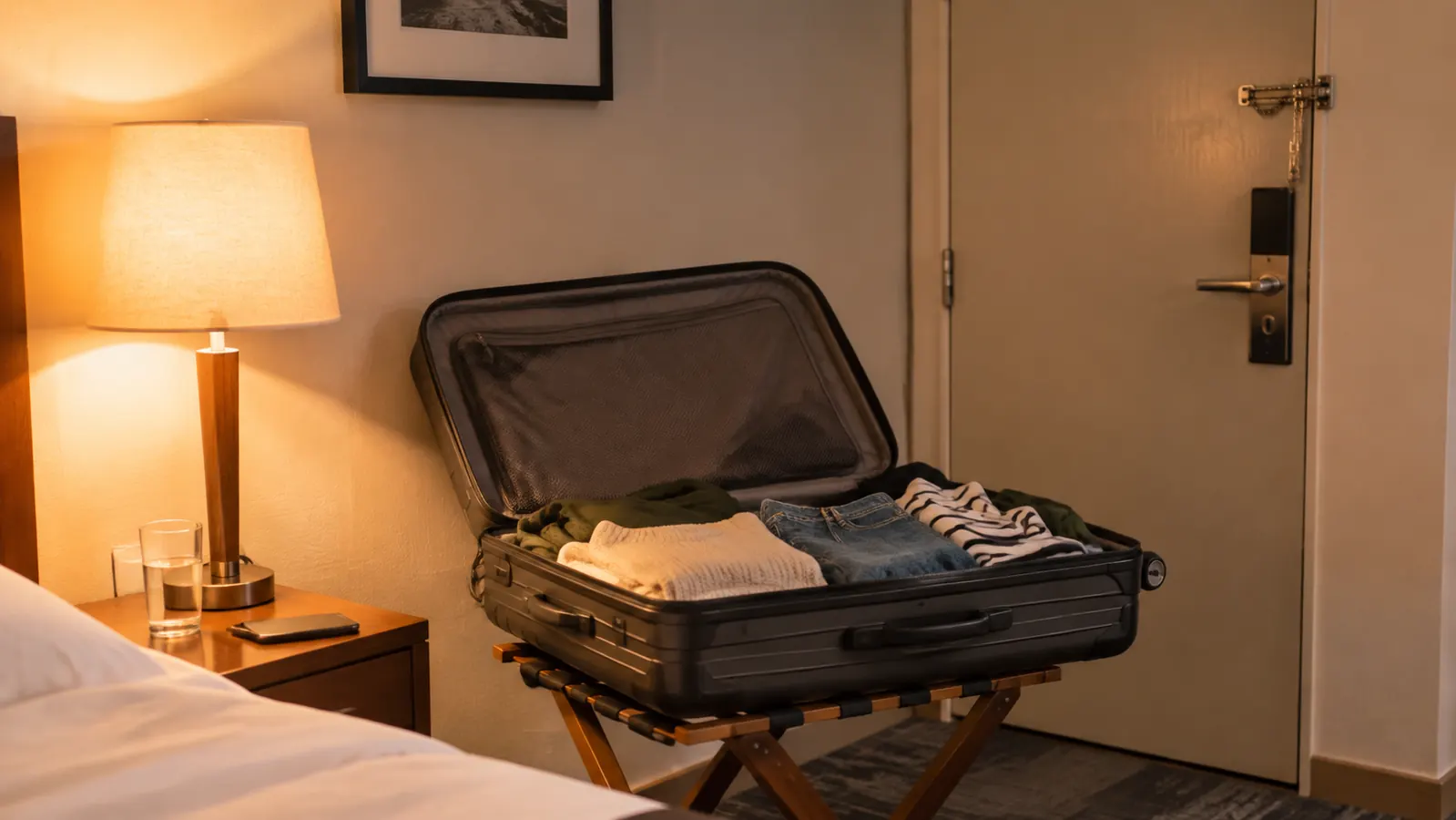
The first thing I do in a hotel room is not unpack. I do not check the view. I do not go looking for the ice machine. I set my suitcase on the folding stand, reach into the zip pocket where I keep the small things, and take out a piece of stainless steel that measures 5.8 inches long and weighs 4.2 ounces. Then I make the door safe. That piece of steel is the Addalock, and it has ridden in my carry-on on every trip I have taken for two and a half years.
I have been a travel agent for twenty-six years, most of them full time and now part time from a ranch house outside Madison, Wisconsin. For a long stretch of that career I did what everybody does. I threw the deadbolt, hooked the little chain, and told myself the door was fine. Then a client told me about a room where the door never latched properly. She pushed it with two fingers and it swung open into the hallway. The front desk moved her, and she told me she still did not sleep well for the rest of that trip. I ordered the Addalock the week I got home. I am sixty-three now, and I travel with my husband Walt. I have decided I would rather spend four ounces of luggage space on being able to sleep than on a third pair of shoes.
The Quick Verdict
A one-piece stainless steel latch you seat in the door frame before you close the door. Four ounces of suitcase space for a door that will not open from the outside, as long as the door swings inward.
Amazon Check Today's Price →The 4.2-ounce habit I do before I unpack
The Addalock is one piece, needs no tools, and fits in the zip pocket of a carry-on. It seats in an inward-opening door in a few seconds and comes out just as fast in the morning.
Amazon Check Today's Price on Amazon →How I've Used It
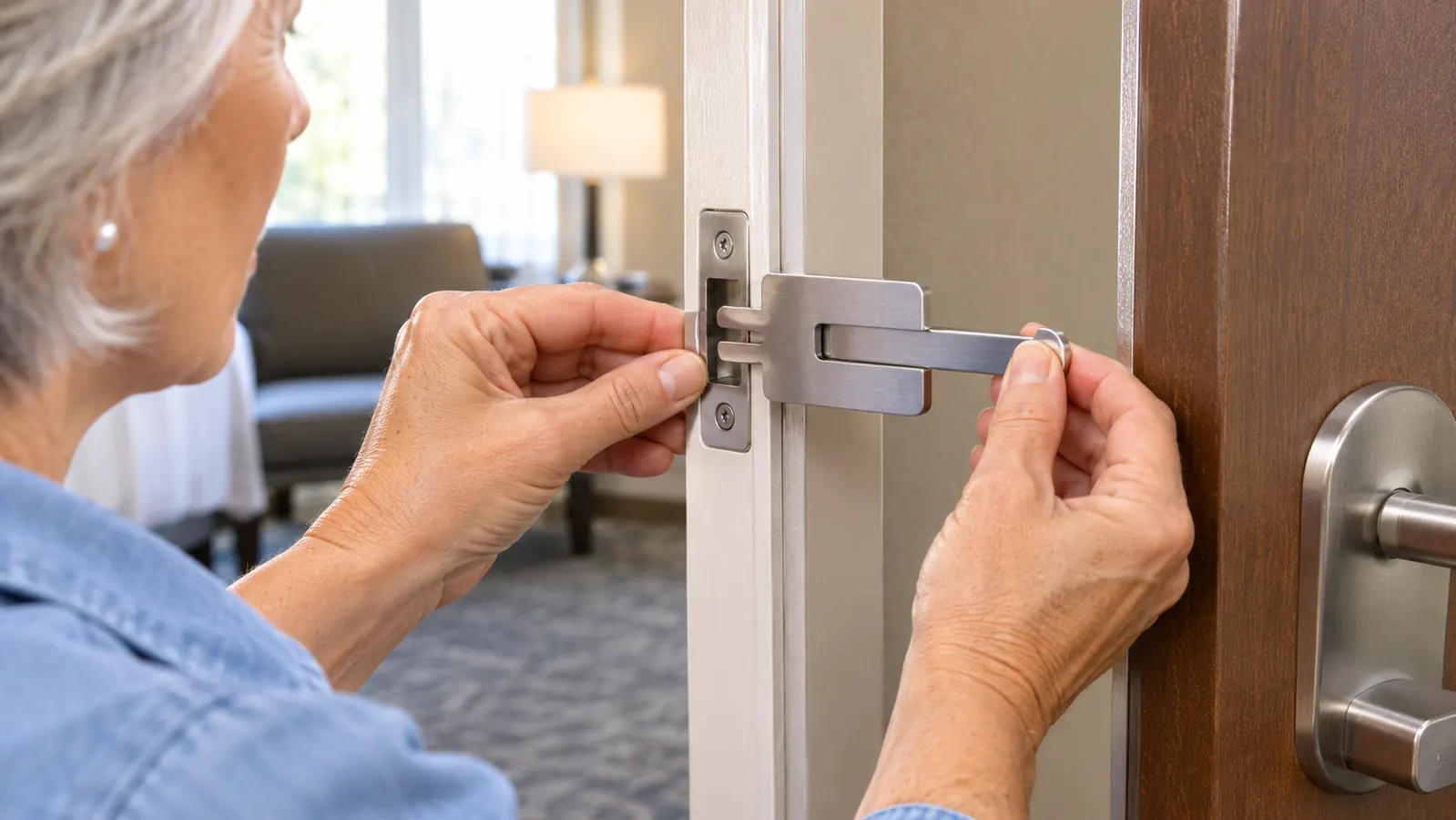
The Addalock is a single piece of formed stainless steel with a flat tongue on one end. You open the door, slide that tongue into the rectangular hole in the door frame where the latch bolt normally sits, and close the door against it. The door's own latch cannot retract, so the handle does nothing from the outside. A key card does nothing. A manager key does nothing. The first time I used it I stood in the room afterward with my hand on the door and felt slightly foolish for how much better I breathed.
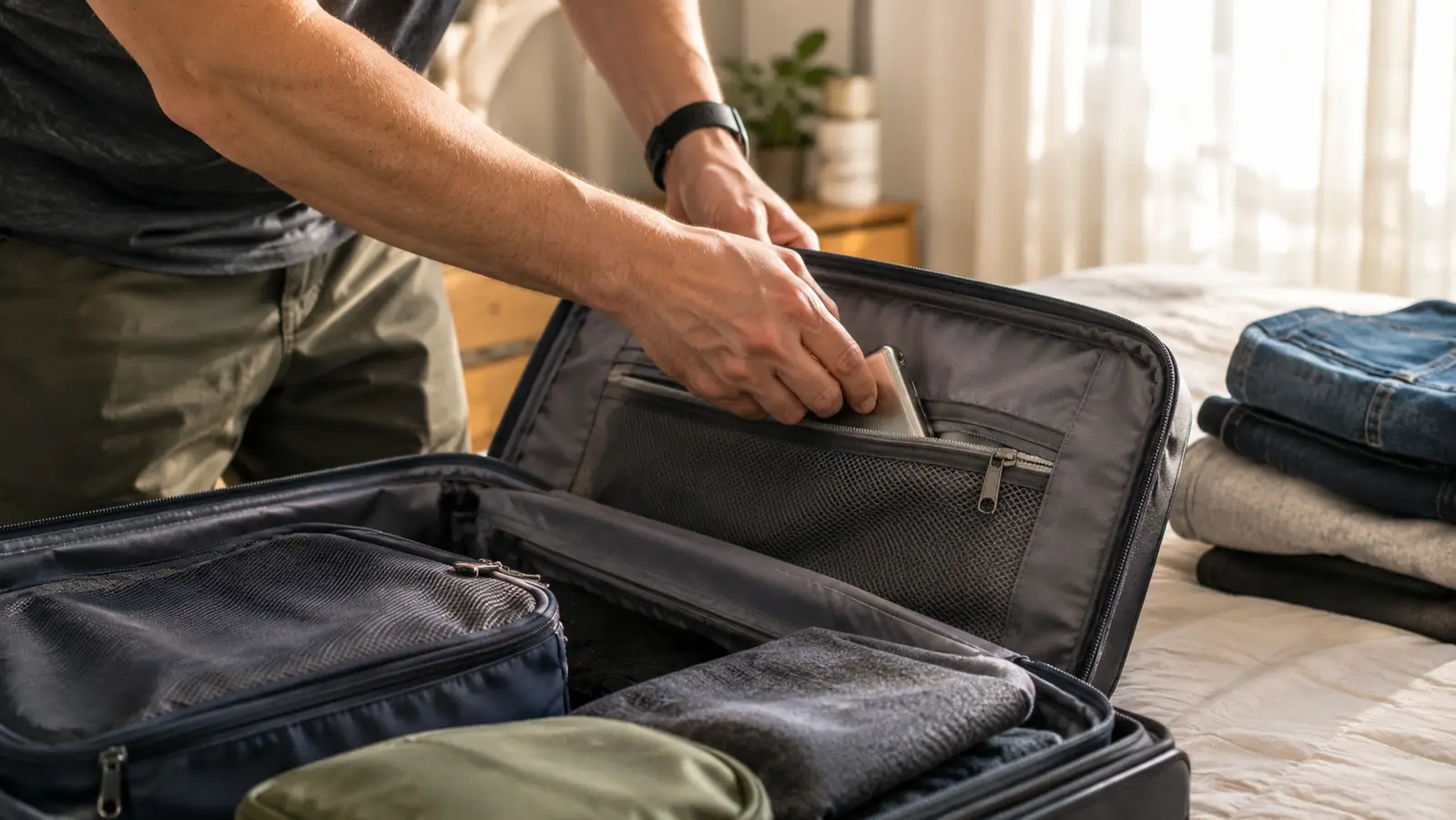
The routine takes me under a minute now. Door open, tongue into the hole, door closed, handle jiggled once to confirm. In the morning I lift it out and drop it back into the zip pocket of my Samsonite before the bag goes back on the stand. The pocket is small and the lock is the only thing in it, which is deliberate. A security item you cannot find at ten at night is not a security item.
I also want to mention the hallway test, because that is what sold Walt. On our second trip with it, he went out for ice and I set the lock behind him, then had him try the door from the corridor with his own key card. He tried the handle. Then the card. Then his shoulder. The door rattled and moved perhaps a quarter of an inch and no more. He came back around through the lobby and told me he had not expected much from a piece of metal that small. That was roughly my expectation too. I thought I was buying a gadget and I got a lock.
The fitting itself is where the small annoyances live, and I want to be honest about them. A standard American hotel latch hole takes the tongue at a straight angle and the door closes with a clean click. The older frames in Europe are sometimes cut deeper or set a little higher, and the tongue sits in at a slight tilt. It still holds. It just takes a second pass. I have also noticed that doors with a fresh coat of paint on the frame need a firmer pull before the latch clears, and I have learned to test the handle twice on those rather than once.
It only works on doors that open into the room, and I want to be plain about that before anything else. Every hotel room I have stayed in for the last decade opens inward, so this has never been a problem for me, but it is the one thing to check before you buy. A connecting door, a sliding balcony door, a door that pushes out into a corridor, none of those are jobs for the Addalock.
What the Addalock Actually Does
The listing calls it a one-piece door latch lock, and that is exactly what it is. Stainless steel, 5.8 by 3.5 by 0.7 inches, 4.2 ounces, meant for the inside of a door and nowhere else. No screws, no adhesive, no installation, nothing to charge. The company behind it, Rishon Enterprises, has been making this style of lock for about twenty years, and the design has not changed much in that time, which I take as a good sign rather than a lazy one. Things that work tend to stay the way they are.
What it does is simple and it does it well. It stops the door from being opened from the outside, whether that is a key card, a front desk key, or a shoulder. I have used it in chain hotels, in a family-run inn in Ireland, in a rental apartment in Portugal, and once in a ground-floor motel room near the Wisconsin Dells where the door had a gap you could see daylight through. Same result every time. The door stayed shut until I opened it myself.
Clients ask me what to buy before a first trip abroad, and I keep a short list. A neck wallet, packing cubes, and this. I do not tell them a door lock will make a bad hotel good. I tell them it takes one worry off the list, and the worries are the part of travel that wears a person down. There is nothing to maintain either. It does not need oiling or adjusting. It lives in the pocket, it comes out, it goes in the frame, and it goes back in the pocket.
One thing I did not expect is how little it looks like a lock. There is no keyhole, no dial, no button, nothing that reads as security to a person walking past in the hallway. It is a flat formed piece of steel that sits inside the frame where the bolt lives, and from the corridor side the door looks exactly as it always did. I have come to think that is a feature. A device screwed to the door announces itself. This one does its work quietly, and the only person who knows it is there is the one who put it there. It barely takes up room in a coat pocket either, which matters on the travel day itself when the suitcase is already zipped shut.
What It Won't Do
It will not do anything while you are out of the room. This is a lock you set from the inside, and its job is to let you sleep, not to guard a laptop while you are at dinner. If you leave it in place when you go down for breakfast, housekeeping cannot get in either, and you will come back to a note slid under the door. I learned that in the first month. Now it comes out and goes into the pocket before I open the door in the morning, and it has become as automatic as putting on my glasses.
It also needs a standard latch hole in the frame. On one older hotel in Portugal the fit was tight and I had to work the tongue in at a slight angle before the door would close, but it went. If a door has no latch recess at all, or the latch sits flush inside a metal frame, the Addalock has nothing to hold onto. And it is not a repair. If the frame is loose or the plate is hanging on by two short screws, a piece of steel in the hole is not going to fix the door.
I have looked at the door stop alarms, the wedge-shaped ones that sound off when a door is pushed against them. Clients swear by them and I understand the appeal, because noise is a deterrent and a loud one is a better deterrent than a quiet one. But they sit on the floor on the inside, and they do their work after the door has already started to move. I have never owned one, so I will not pretend to review it. I only know which of the two I would rather have between me and a hallway at two in the morning, and it is the one that does not let the door move at all.
The other limit worth naming is the connecting door. Plenty of hotel rooms have one, the second door that opens into the room next door, and on a couple of trips I have stood in front of it and wished. The frame on a connecting door is often set flush and the latch recess is shallow, so there is nothing solid for the tongue to bite against. I tried it once out of stubbornness. It went in, then dropped out the moment I closed the door. Now I look at the room layout when I book, and I ask for a different room if I can.
Two and a Half Years of Hotel Nights
I bought this in my twenty-fourth year as an agent, right after that conversation with my client, and it has gone with me on every trip since. International and domestic. Three nights or eleven. It has not bent. The tongue still seats into a frame cleanly, and the edges are still smooth enough that I do not worry about it catching on the door or snagging the pocket lining. Stainless steel at this thickness does not do much once it has been formed, and that is the whole point of it.
The night I remember is a rental apartment in Ireland where the door had been repainted so many times it no longer sat flush in its own frame. The lock still worked, but I had to pull the door firmly to get the tongue to seat, and I stood there a moment thinking about how a door can look perfectly sound and not be. Then I said a quiet thank you, which is what I do, and went to bed. Four ounces of steel is a strange thing to be grateful for. I was grateful for it.
At 4.2 ounces, I do not think about it. My carry-on comes in under the airline limit with room to spare, and I have never once pulled the lock out of the bag to make weight. Set against the things people pack and never touch, a spare charger, a third paperback, a rain jacket for a forecast with no rain in it, this earns its space on every single trip. Walt's bag is the older softside roller and he does not carry one, which is his business. He also does not sleep on the hallway side of the bed.
I have kept count in a loose way, the way you count anything you do out of habit. Close to fifty hotel nights since I bought it, spread across a dozen or so trips, two of them eleven days long. The steel has picked up a faint dulling along the tongue where it rubs the frame, the sort of wear a stair rail gets. No bend, no burr, no rough spot that catches on fabric. I have never had to replace it and I have never had to think about replacing it, which is the better test of anything you carry.
What I Liked
- One piece of stainless steel, nothing to assemble, charge, or adjust
- Weighs 4.2 ounces and stores smaller than a wallet
- Seats in seconds on any inward-opening door with a standard latch hole
- No tools and no installation, so it works in a hotel you have never seen before
- Has held up through two and a half years of regular travel without bending or loosening
Where It Falls Short
- Does nothing for doors that open outward or slide
- Only secures the room while you are inside it
- You have to remember to remove it before housekeeping arrives
- Needs a standard latch recess in the door frame
- A supplement to a sound door, not a repair for a bad one
Two and a half years of hotel doors, and I have never once closed one and wondered whether it actually caught.
Who This Is For
If you are a woman traveling alone, this belongs in your bag, and I say that to clients most weeks. If you are older, or you travel with a spouse and one of you sleeps lighter than the other, it is worth the four ounces. If you stay in rental apartments and budget motels where the door has clearly been hanging there since the seventies, it is worth it. And if you are the person who lies awake listening to the ice machine and the elevator and the cart in the hall, it buys you something a deadbolt does not, which is the feeling that the room is actually closed. I am sixty-three, I travel four or so times a year, and I put it in before I unpack.
Who Should Skip It
Skip it if you only ever stay in rooms with a working deadbolt and a chain and you have never once lain awake listening to a hallway. Skip it if your trips are mostly to places with outward-opening doors, or if you would rather not carry one more separate item that has to be remembered in the morning. Skip it if you want something that protects the room while you are away from it, because this was never pretending to be that. And skip it if you are looking for a lock that will do the job on a sliding door or a balcony panel. It will not, and no amount of wishing changes that.
Put it in the frame before you unpack
One piece, 4.2 ounces, and it has kept every hotel door I have slept behind shut for two and a half years. Check the current listing and today's price on Amazon.
Amazon Check Today's Price on Amazon →