
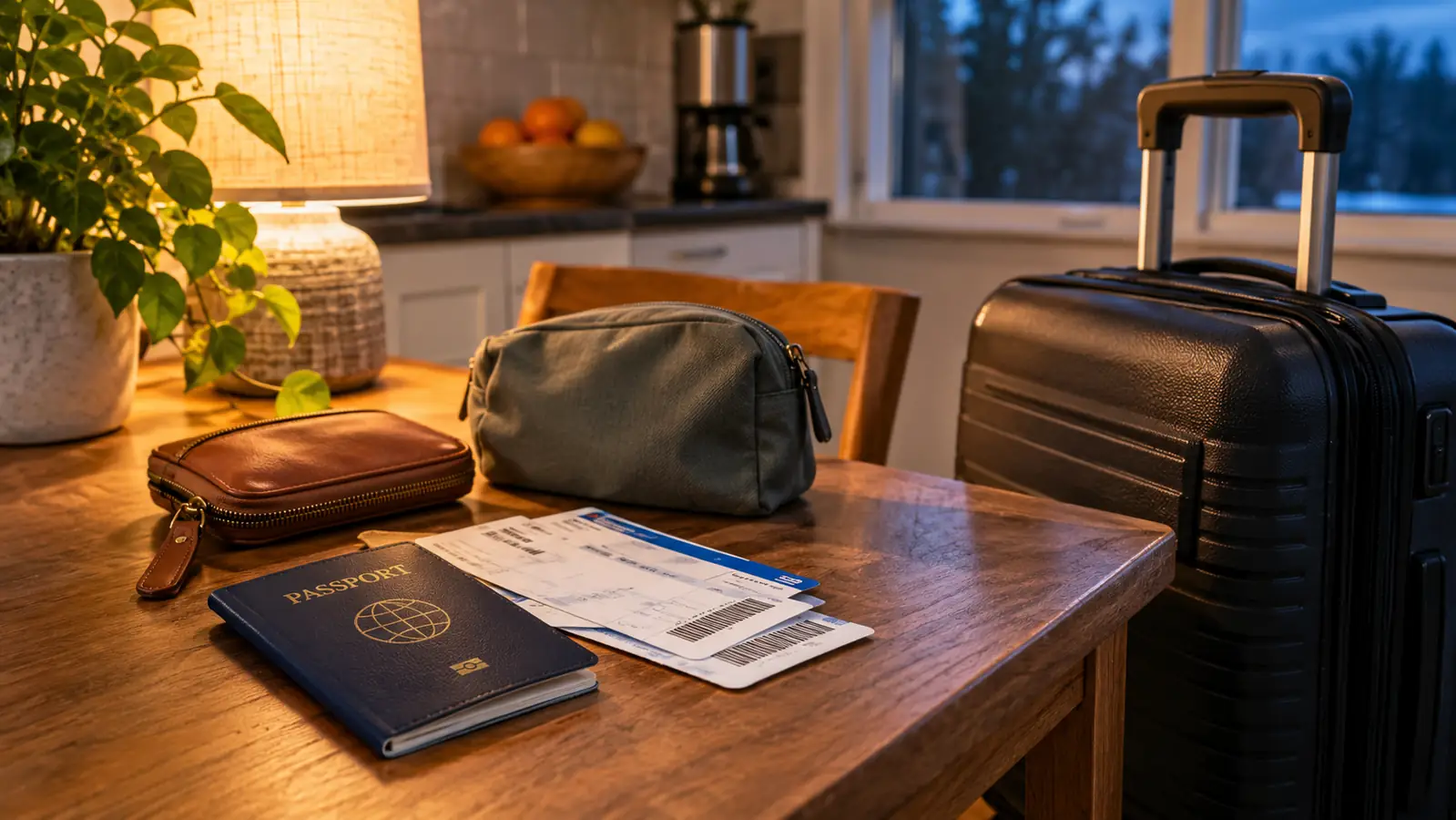
I have sold trips for twenty-six years, and the question I hear most from travelers over fifty is not where to go. It is how to keep a passport and cash from walking away while they are distracted by a train board or a hotel desk. My answer, after three years of carrying one, is the HERO Travel Supply Neck Wallet. I bought mine before a trip to Italy, and it has gone with Walt and me on every international trip since. It is not a dramatic piece of gear. It is a nylon pouch on an adjustable strap, and that is exactly why it works.
Most people overpack the thing or underuse it. They stuff every card and receipt into the pouch, wear it outside their shirt, and then wonder why it feels awkward. Or they leave it in the hotel room because it is uncomfortable. The fix is a routine, not a better pouch. The steps below are the routine I use from the night before a flight to the last taxi home. They take about five minutes to learn and less than a minute to repeat. That is the whole method.
Put the passports where your hand can find them without thinking
The HERO Travel Supply Neck Wallet holds both passports, a backup card, and local cash in five compartments, with RFID blocking lining and a zipper closure. Wear it under your top on travel days and in crowded places. It weighs 2.3 ounces, so you will forget it is there until you need it.
Amazon See the HERO Travel Supply Neck Wallet on Amazon →Step 1: Decide what belongs in the wallet before you pack it
The wallet has five compartments and two sections. That sounds like a lot until you sort by job. The passport compartment is for passports and nothing else. The zip pocket is for the backup card and the local cash you do not plan to spend that day. The remaining compartments take the small things: a boarding pass, an insurance card, a paper list of emergency numbers. If an item does not help you prove who you are or pay for something if a card fails, it does not go in.
On an international trip, I put both passports in the passport compartment: mine and Walt's. I add one backup credit card and enough local cash for a taxi and a meal. The pouch measures 0.2 by 5.5 by 8 inches and weighs 2.3 ounces. It is not a suitcase. The moment I try to make it one, I stop wearing it, and a neck wallet you leave in the room is just a very small drawer. I want it light enough that I forget it is under my shirt.
Day spending money lives in a small ordinary zip purse in my handbag. That is deliberate. If I need coins for a market stall, I do not want to pull the whole pouch out in public. The pouch is for the things I cannot replace easily: passports, a backup card, and the cash that would get us back to the hotel if the day went sideways. The purse is for the day. The pouch is for the trip. I keep them separate even when I am just going down to breakfast.
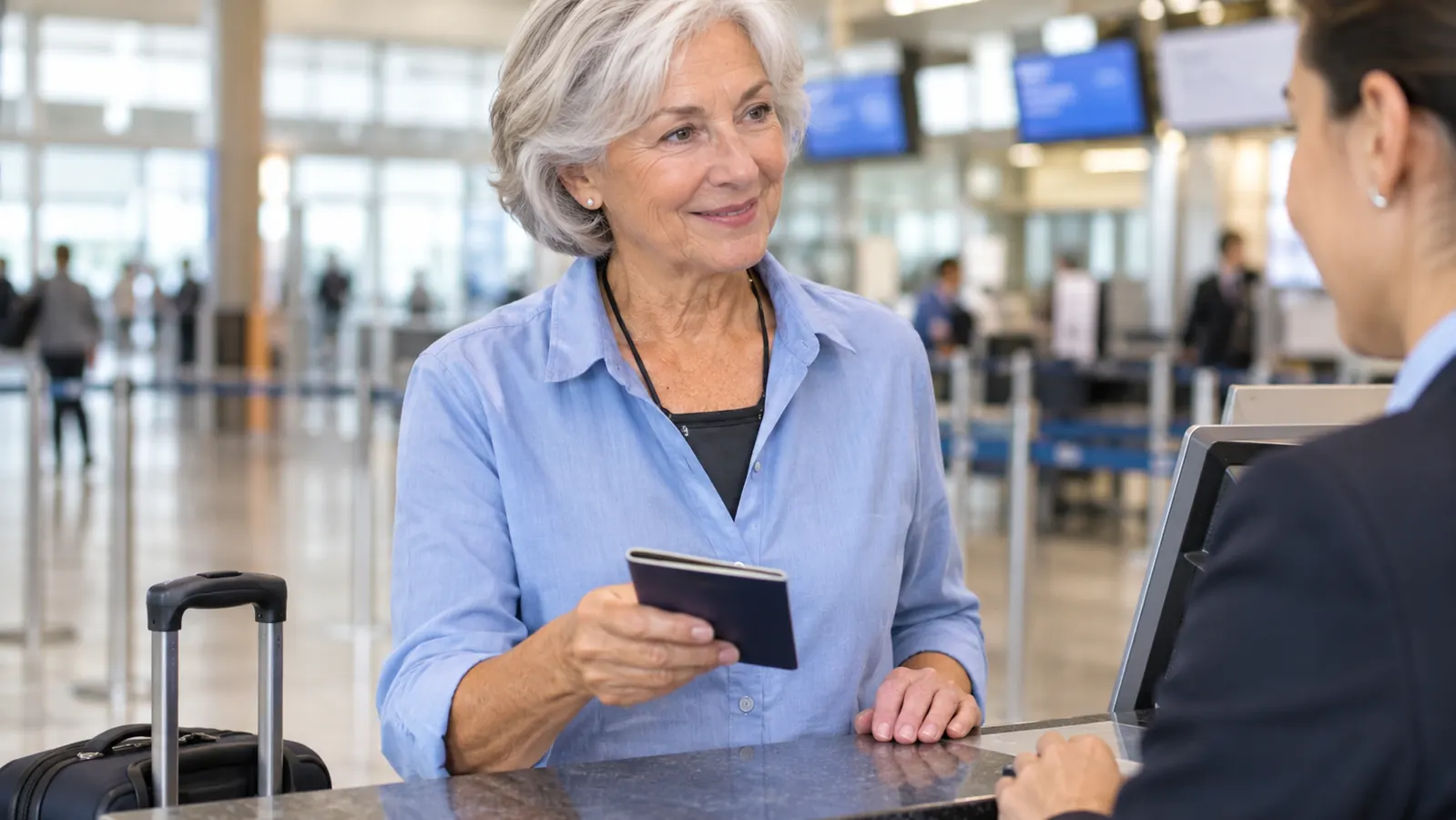
Step 2: Wear it under your top, not over it
The strap is adjustable, and that matters more than it sounds. I loosen it, put it over my head, and tighten it until the pouch sits against my chest, inside my shirt. If it hangs too low, it bounces when I walk. If it is too tight, I feel it every time I take a breath. A few inches of adjustment is the difference between wearing it all day and taking it off in the first taxi. I set the strap in my hotel room, not in a crowd.
The material is ripstop nylon with YKK zippers. I do not baby it. It has been under a rain jacket in Ireland and against a cotton shirt in Portugal. The zipper is the part I check. I close it fully and make sure the pull is not sticking out so it does not catch on a button. A zipper that is half closed is an invitation, and I do not want to give one. The pouch is water resistant, which matters more for a spilled coffee than for a storm.
At airport security, I step to the side before I reach the bin. I pull the pouch out from under my shirt, put it in the bin with my shoes, and watch it come through. I do not send it down the belt inside a jacket pocket where I cannot see it. The same goes for a train station scanner. The pouch is not a hidden compartment. It is a controlled one, and I keep control of it. Then I put it back on before I pick up my carry-on.
Step 3: Load it the night before, and use one backup card system
I pack the pouch the night before a flight, after I have laid out my clothes. Passports go in first. The backup card goes in the zip pocket. The local cash goes in the same pocket but in a separate fold so I am not pulling out a card when I want a note. I check the zipper, then I put the pouch on top of my carry-on so I cannot forget it in the morning. This takes two minutes and saves a bad hour at the airport.
The backup card system is simple: one card that stays in the pouch, one card that lives in my day purse, and no card that lives in both. If the day purse is lost, the pouch still has a way to pay. If the pouch is not with me, which should not happen, the day purse still works. I do not carry every card in the pouch. That would turn one mistake into a very long phone call to the bank. I also do not carry a wallet full of cards in my back pocket.
The RFID lining is why I do not worry about the pouch being read through my shirt. I am not an engineer, and I cannot test it in my kitchen. I can tell you that the listing says the pouch has multi-RFID layers, and I have carried cards in it for three years without a problem. That is not proof of much. It is one more reason to keep the important cards in the pouch instead of a back pocket. The HERO Travel Supply Neck Wallet was built for this one job, and it does it without a lot of extra bulk.

Step 4: Use it at the hotel, not just in the airport
The airport is not the only place where a passport goes missing from a traveler's attention. Hotel check-in is the other one. I keep the pouch under my shirt until we are in the room. At the desk, I pull out the passport by itself, not the whole pouch, and I put it back before we walk away. The pouch stays against my chest while I sign the form and listen to the breakfast hours. I have stood at too many desks with a passport in my hand and a pen in the other to rush this part.
In the room, I empty the day cash into the zip purse and put the pouch in the zipper pocket of my carry-on. Walt knows the routine. The pouch does not go on the nightstand, and it does not go in the drawer. The nightstand is where things get left behind. The carry-on zipper pocket is where things get found again because I check it before we leave. We have a rule: the pouch goes in the bag before the shoes come off.
If we go out to dinner and I do not want the strap under a dress, I take only the zip purse and leave the pouch in the carry-on, which is locked in the room or left with the front desk. On a travel day, the pouch stays on me. On a short evening walk, it stays in the room. The point is to make a decision before I am tired, not in a lobby with a taxi waiting. The HERO Travel Supply Neck Wallet is small enough that I usually just wear it and skip the decision.
Step 5: Build a three-point check for travel days
I check the pouch at three points: when I leave the room, when I leave a taxi or train, and after I pass through any crowd. I do not open it. I just put my hand on the front of my shirt and feel that it is there. That takes one second. It is the same check I do for my keys at home, and it has kept me from walking away from a seat with the pouch still on the chair. The check is not worry. It is a habit.
Crowds are where I am most likely to forget. A market, a train platform, a busy museum entrance. I put my hand on the pouch before I go in, and I keep my bag in front of me. I do not wear a backpack on both shoulders in a crowd. I do not set the pouch down on a cafe table. These are not dramatic rules. They are the same rules I would give a client who is going to Rome for the first time. They work because they are simple enough to keep.
Before a long flight, I say a quiet prayer and then I check the zipper. That is my order. Gratitude first, then the practical thing. I also tell Walt where the pouch is, even though he knows. On a travel day, we are both tired, and a small piece of information repeated is easier than a search at the gate. The HERO Travel Supply Neck Wallet has made that check simple because it is always in the same place. That is most of what I want from travel gear.
What Else Helps
The neck wallet is the center of the routine, not the whole routine. A small ordinary zip purse for day cash keeps me from opening the pouch at a market stall. A carry-on with a zipper pocket gives the pouch a home in the room. A photocopy of the passport, kept in a separate bag, is useful if a passport is lost, and it is easy to make. I also carry a portable door lock for hotel rooms, but that is a different job. The pouch protects what is on me. The door lock protects the room. Both are part of the same idea: decide where the important things live before you are tired.
One honest limit: a neck wallet does not make you invincible. If someone is determined to grab you, a pouch under your shirt will not stop them. It makes quiet theft harder because the pouch is not in a back pocket and not hanging from your shoulder. That is the trade. You give up quick access and you get a better place to keep the things you cannot replace. For most travelers over fifty, that is the right trade. I would rather reach under my shirt than pat a back pocket every ten minutes.
For couples, one pouch can hold both passports, as ours does, but only if the wearer is the person who handles check-in. If Walt is the one at the desk, he carries the pouch that day. Do not put both passports on one person and then split up in a station. The pouch only helps if it is with the person who needs it.
The pouch does not make me brave. It makes me boring to a pickpocket, and boring is what I want on a travel day.
Keep both passports against your chest, not in a drawer
I have carried the HERO Travel Supply Neck Wallet for three years, and it has earned its place in my carry-on. It holds both passports, a backup card, and local cash in five compartments, with RFID blocking and a zipper closure. The strap adjusts, the nylon takes a scuff, and the zipper still closes the way it did on the first trip. The listing says every wallet is individually tested in the USA and comes with a lifetime replacement guarantee. If you want one less thing to worry about on your next flight, start with the pouch you wear.
Amazon See the HERO Travel Supply Neck Wallet on Amazon →