
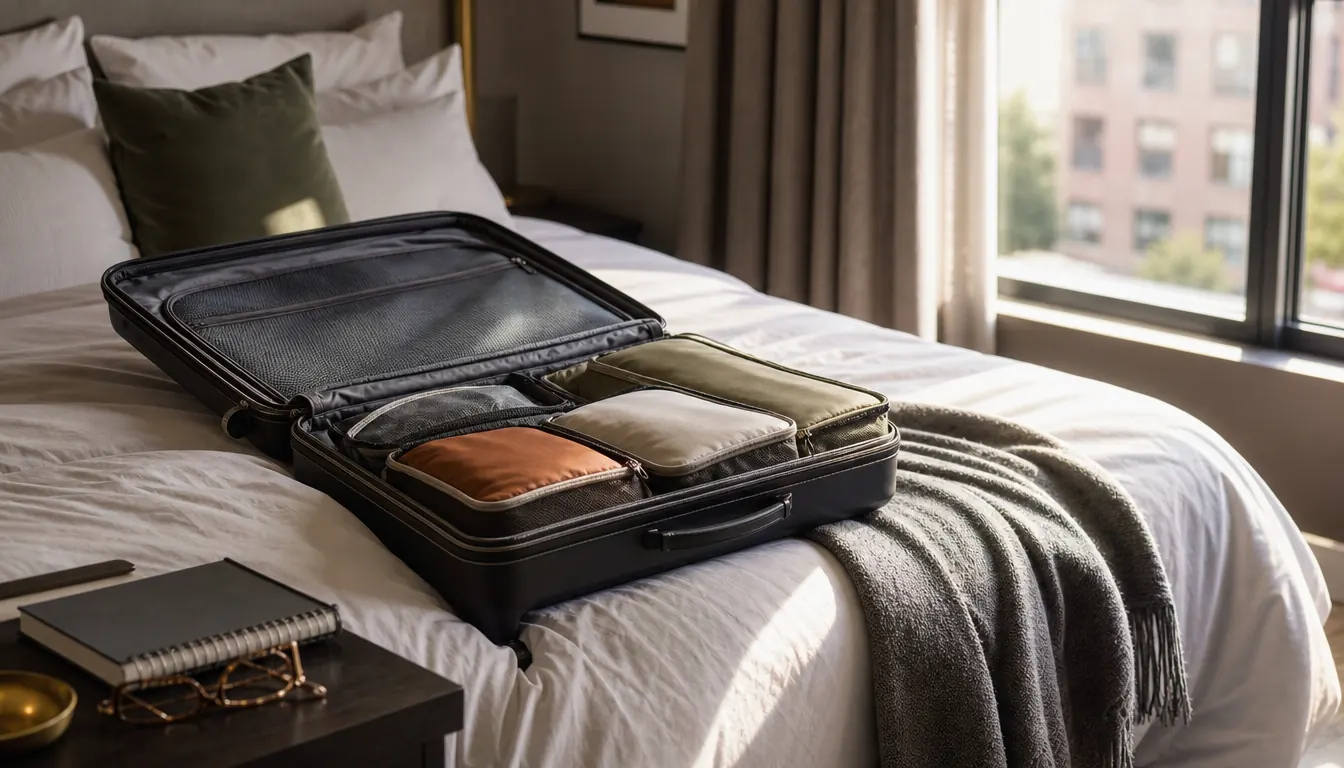
I used to pack for a two-night trip the way I pack for a two-week trip, and then I would stand over the suitcase and negotiate with myself about what to leave behind. I have been a travel agent for 26 years, and I still see clients pay for a checked bag they did not need. Now my husband Walt and I share one Samsonite carry-on for short domestic trips, and the BAGAIL 6 Set Packing Cubes are the reason it works. We are both in our sixties. We do not want to wrestle a bag through an airport or pay to check a suitcase for a three-day visit to our son's family. The cubes turned a pile of clothes into six neat packages that fit in the same footprint every time.
If you have ever tried to pack for two people in one carry-on, you know the usual result. One person's clothes take over the top half, the other person's shoes end up in a plastic bag, and the clean socks are somewhere under a sweater. I tried zip-top bags for years. They worked until they did not, and the hotel room looked like a small explosion by the second morning. The BAGAIL cubes gave us a simple rule: each person gets their own stack, and each stack has a home. That is the whole method, and it starts before you open the suitcase.
One carry-on for two starts with a set of six
The BAGAIL 6 Set Packing Cubes is the set Walt and I have used on every trip for two years. Six zippered pieces, nylon fabric, 10.4 ounces for the set, and a handle. It is the first thing I reach for when the suitcase comes out.
Amazon Check Today's Price on Amazon →The Five Steps I Use
Step 1: Set the one-bag limit before you touch a single shirt
Walt and I decide the bag before we decide the outfits. For a two- or three-night domestic trip, we take the Samsonite Omni PC Hardside Carry-On. It is 20 inches, a spinner, and about 6.1 pounds empty. For anything longer, we each take our own carry-on and check nothing. That limit sounds strict, but it removes the endless what-if packing that fills a bag with clothes nobody wears. I have watched clients pay for a checked bag and then spend twenty minutes at the carousel because they packed for every possible dinner. We pack for the trip we booked.
The reason the limit matters is that packing cubes do not create space. They organize the space you already have. The BAGAIL set is six rectangular pieces made of nylon, with zipper closures and a handle. The set is listed at 10.4 ounces and a 50-pound load capacity. I do not test the load capacity with bricks, but I can tell you that six cubes of clothes fit in the Samsonite with room for a toiletry bag and a pair of shoes. That is the whole math of a short trip. Two people, one bag, six cubes, and a little room left over.
If you are packing for two people, the one-bag limit also settles the argument about shoes. Walt gets one pair of walking shoes on his feet and one pair of lighter shoes in the bag. I do the same. The cubes make that trade visible. When his shoe cube is full, it is full. There is no mysterious extra pocket to absorb a third pair. On the first trip we took with this system, Walt tried to add a pair of sandals at the last minute. I pointed at the cube. He put the sandals back in the closet. We did not miss them.
Step 2: Sort by person first, then by day
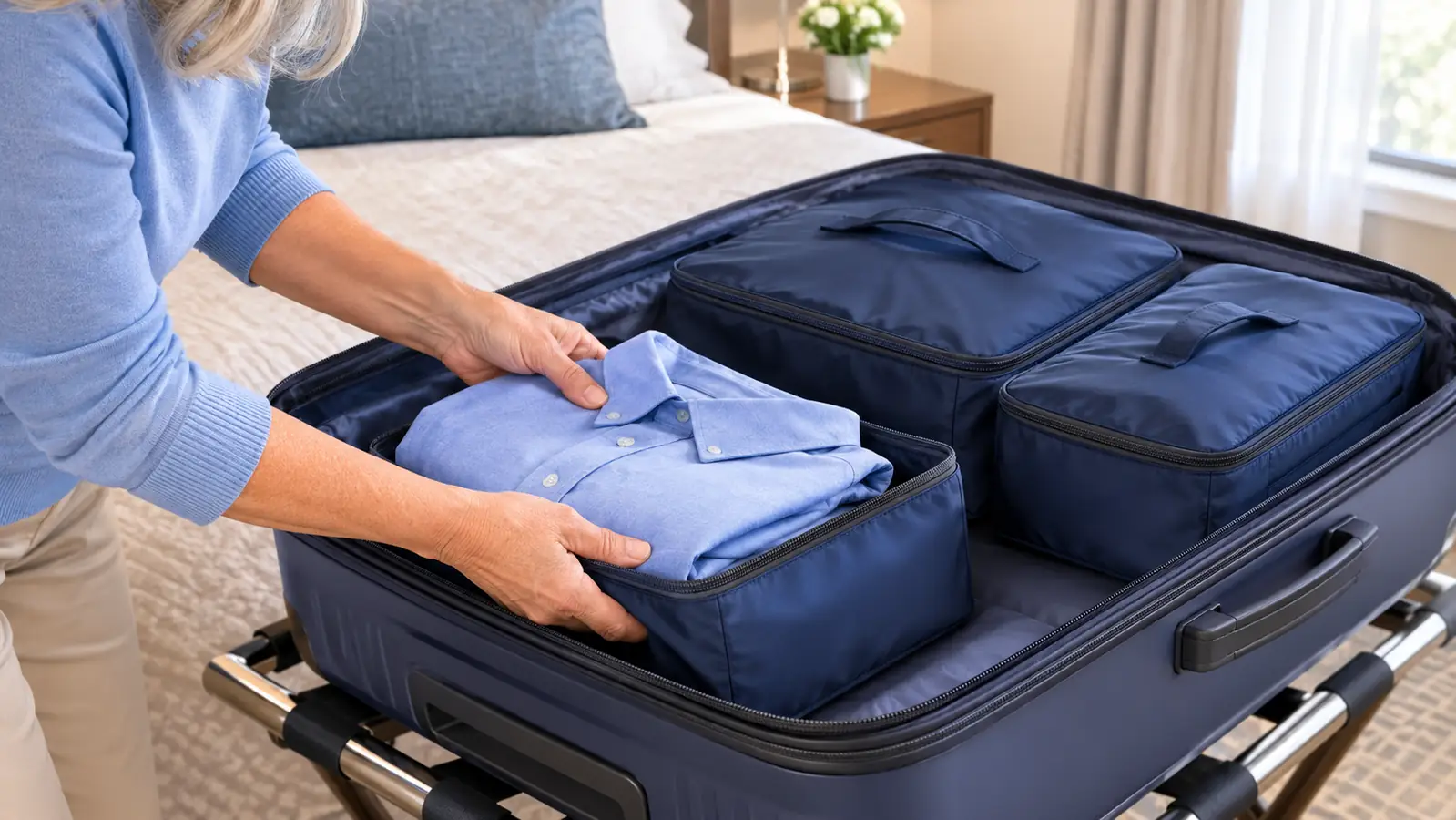
Most packing advice tells you to sort by garment type. I tried that. It produced a cube of shirts, a cube of pants, and a daily hunt for matching pieces. For two people in one suitcase, sort by person first. Each of us gets our own stack of cubes. Then, inside that stack, sort by day. The first morning's clothes go in one cube. The second day goes in another. The last day goes on top of the suitcase or in the lid. This is not about being fussy. It is about not unpacking the entire bag to find a clean shirt at 7 a.m.
The BAGAIL set has six pieces, which is enough for our short trips. I use two cubes for my clothes, two for Walt's, one for sleepwear and underthings, and one for the small items we both need: chargers, a travel bottle of hand wash, and the folder with hotel confirmations. If that sounds too tidy for real life, it is. The first time I did it, I labeled the cubes with a strip of masking tape. I still do. Walt's tape says WALT in capital letters, because he has been known to claim my good sweater by accident.
Sorting by day also tells you what you can leave home. If a shirt only works with one pair of pants and the pants are already in the bag, the shirt stays. If a sweater is too heavy for the forecast, it stays. The cube becomes a decision tool, not just a bag. That is the part I did not expect when I bought the set two years ago. I thought I was buying organization. I was really buying a limit.
Step 3: Roll the soft things, fold the stiff things, and zip the cube closed
Rolling is not a religion. It is a way to get air out of cotton and linen. I roll T-shirts, sleepwear, and light sweaters. I fold collared shirts and pants because rolling leaves creases in the wrong places. The point is to fill each cube to a soft, even thickness. A cube that bulges in the middle is harder to stack. A cube that is half empty will collapse and take up the same space anyway. Pack it as if you are making a bed, not as if you are stuffing a pillow.
The BAGAIL cubes have zipper closures, and I close them all the way before they go in the suitcase. That sounds obvious, but the first trip I left one open and the clean socks migrated into Walt's shoe cube. Now I zip every cube and give it a small press with my palm. The cubes are nylon, so they slide against each other instead of catching. That makes the next step easier. It also means I can pull one cube out at the hotel without dragging three others with it.
If you are packing for two people, keep the cubes separate. Do not mix your things with your partner's things just to save space. The whole benefit is that Walt can open the suitcase in a hotel room and find his own cube without moving my clothes. On a short trip, that small courtesy is worth more than the few cubic inches you might gain by mixing. It also makes the return pack faster, because each person knows which cube is theirs.
Step 4: Load the suitcase in layers, with the heavy items near the wheels
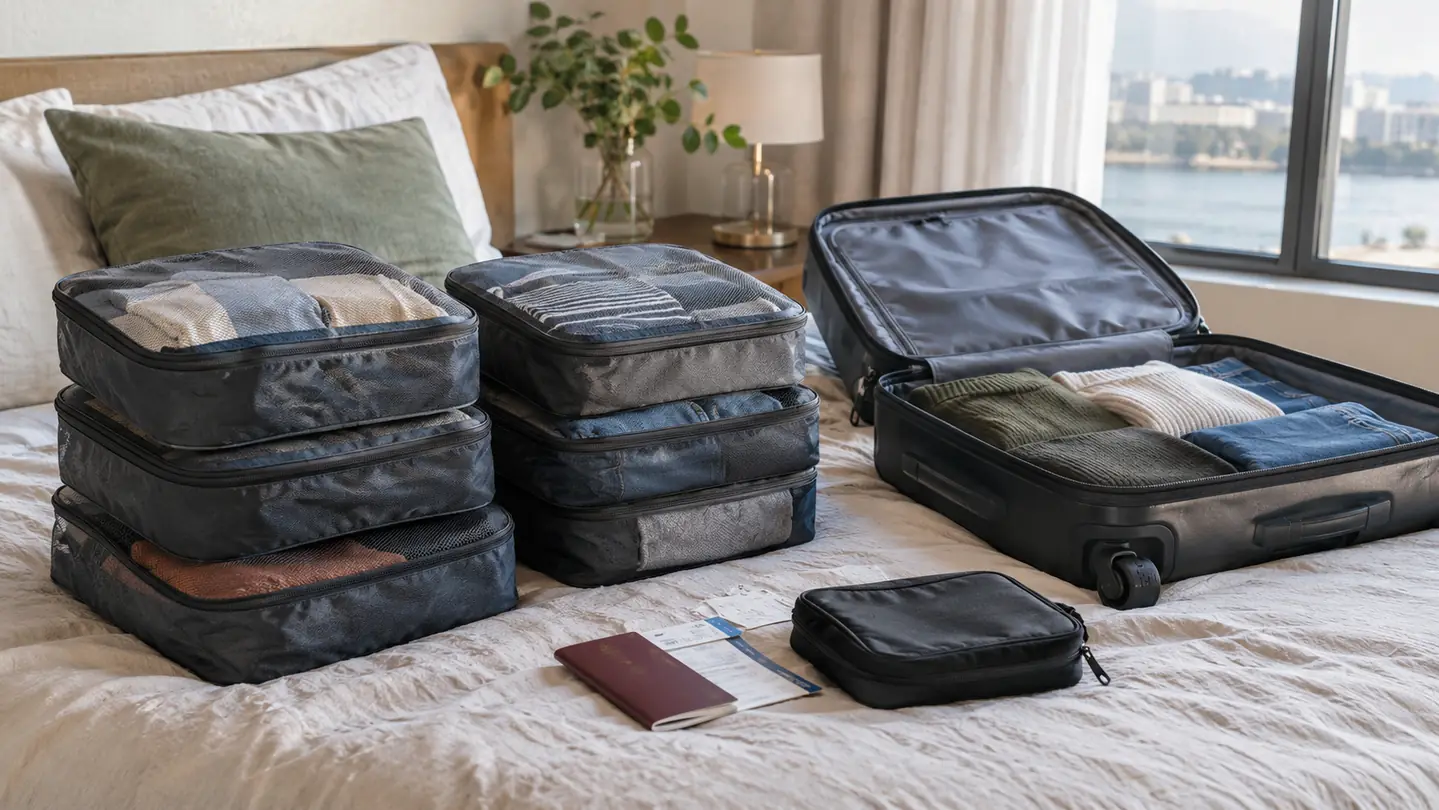
Open the carry-on flat on the bed. Put the heaviest cube at the end near the wheels, because that is the end that stays down when the bag is upright. For us, that is the shoe cube or the cube with pants. Then stack the lighter cubes on top. Keep the things you need at security or on the plane in the top layer or the lid pocket. I put the clear pouch with liquids in the lid so I am not digging through cubes at the checkpoint. Walt puts his reading glasses in the same pocket every time.
The BAGAIL cubes are rectangular and they stack without much wasted space. I do not force them. If a cube will not sit flat, I take out one item and try again. The set is light, 10.4 ounces for the whole set, so the cubes themselves do not add much to the bag. The clothes are the weight. The cubes are the frame. When I lift the packed bag by its handle, I want it to feel balanced, not like a bag of rocks with a handle on one side.
On the return trip, the order changes. Dirty clothes go in one cube, clean clothes in another. I keep a small nylon bag for laundry, but the cube does the same job. If we bought a souvenir, it goes in the space left by the food we ate. The bag still closes. That is the test. If it does not close without a fight, something comes out. I have left a hotel room with a paperback book I finished and a pair of socks I did not need. The suitcase thanked me.
Step 5: Pack a small go-bag for the flight and leave the rest zipped
The cubes live in the suitcase, but the flight is its own small trip. I pack a separate pouch with the things I want under the seat: a phone charger, a small notebook, a pen for the customs form, and any medication. Walt keeps his own pouch. That way neither of us is opening the overhead bin to find a pill or a cable. The cubes stay zipped until we reach the hotel. If the flight is long, I also keep a light sweater in the pouch because airline cabins are either warm or cold, never in between.
Before I close the suitcase, I do a final check. Passports in the neck wallet. Hotel confirmation in the folder. The Addalock door lock in its zip pocket. Then I close the bag and lift it by the handle. The BAGAIL cubes are easy to pull out without unpacking the whole suitcase. When we get to the room, each cube goes straight into a drawer. The suitcase stays empty and out of the way. That is the part that makes a hotel room feel less like a pile of luggage and more like a place to rest.
The last step is the one I learned from years of planning trips for other people: leave a little empty space. Not much, just enough for a bottle of water or a gift. A suitcase packed to the zipper is a suitcase that fights you on the return trip. The cubes make the empty space visible. You can see where it is, and you can protect it. I usually leave one corner free, near the top, and I do not fill it no matter how tempting it is.
What Else Helps
Packing cubes are the frame, not the whole picture. I also carry a small neck wallet with the passports and a backup card, and I keep it under my top on travel days. At the hotel, I use a portable door lock on any door that opens inward. Those two habits have nothing to do with cubes, but they are part of the same idea: put the important things in a known place and keep them there. A packing list on the phone helps, too. I make mine before I open the suitcase, not while I am standing over it.
For clothes, the best addition is a laundry bag. The BAGAIL set has six pieces, so on a longer trip I use one cube for dirty clothes and leave the others for clean ones. I have never used vacuum compression bags. I have read the listings and listened to clients, and the tradeoff is clear: they save space but they make the bag heavy and stiff. For a two-night trip, I do not need that trade. I need to find my socks. A small laundry bag and a little restraint will do more for me than a vacuum seal.
We have used the same BAGAIL set for two years, on every trip, and the suitcase still closes the same way.
If you are tired of unpacking the whole suitcase to find one sock
The BAGAIL 6 Set Packing Cubes is the set I bought two years ago and still use on every trip. Six pieces, nylon, zipper closures, 10.4 ounces. Start with one carry-on and see how much room you actually have.
Amazon Check Today's Price on Amazon →